Tuesday, March 30, 2021

What's Missing? Justice and the accusations against Armie Hammer

 [This post includes a discussion about allegations of sexual assault and sexual violence more generally]

The original allegations

On January 1st, Armie Hammer tweeted “2021 is going to kneel down before me and kiss my feet...” Just ten days later he was trending on twitter following serious allegations of abuse and sexual misconduct including rape accusations. The main accuser, known as Effie, released multiple screenshots of alleged conversations with the actor along with her accusations. Within these screenshots were some harrowing conversations including one about cannibalism. One would expect the most popular tweets following these accusations to be those trying to hold him accountable and messages of support for the women. Instead the accusation that Hammer had been emotionally, sexually, and physically abusive got lost behind the comedic response to the disturbing screenshots.


Later allegations and the response

Following the early allegations, at least three women who Hammer  had been publicly linked to, ended up speaking out as well. Even given the seriousness and breadth of accusations against Hammer, the coverage has not reflected the weight of the accusations. For example, ENews broke a story where Paige Lorenze, talked about how she “knew that [she] just need[ed] to get out” of her relationship with Hammer because he was “definitely controlling” and dangerous, with a caption saying “Armie Hammer’s ex, Paige Lorenze, is coming forward with detail about their ‘polyamorous’ relationship.


Injustice, knowledge, and communication

This disappointing coverage is in part due to a broader injustice in how we talk about and understand rape. In 2007, Miranda Fricker coined the term epistemic injustice. Epistemic injustice is when prejudicial beliefs keep us from seeing people as reliable sources of knowledge. Because an integral part of being human is the ability to gather and share knowledge, these actions deny people some part of their humanity.

One subset of this brand of injustice is called hermeneutical injustice. This occurs when “some significant area of one’s social experience is obscured from collective understanding.” When this type of injustice occurs people lack the language to communicate their own experiences and others lack the concepts and interpretive tools to understand those experiences. As such, these people's experiences are often minimized, misunderstood, or erased.


Rape myths as an example of injustice

The broad acceptance of rape myths is an example of this injustice. The false beliefs about who rapes, what rape looks like, and how someone should respond to rape hinder our ability to understand sexual violence. Rape myths cause people to operate under false conceptions of sexual violence, and people’s real experiences are measured against these faulty concepts. As such when people hear accusations of rape, the pervasiveness of these rape myths causes people to minimize, dismiss, or miscategorize experiences of sexual violence. This has real consequences.  In fact, researchers have found that the more accepted rape myths are by jurors, the less likely an accused rapist is to be convicted. These same myths work in a similar way to obscure the understanding around these women's accusations against Hammer.


Myth 1: Rape as a consequence of promiscuity

The first myth that is causing injustice by perpetuating misunderstanding is the myth that promiscuity can be equated with consent. This myth suggests that promiscuous women always want sex, and conversely, only pure women deserve protection. This myth especially works to obscure Effie’s experience. Effie is open about her sexual relationships, talks about stripping, and was also involved in a BDSM relationship with Hammer. Because people have accepted that this type of promiscuous behavior implies consent, it becomes easy for people to obfuscate Hammer’s actions instead of taking seriously her claims of abuse.

This can be seen in especially the early coverage where many articles did not center Effie’s accusations at all and instead explained the situation as simply kink on Hammer's part. In fact, multiple publications have still used kink as an explanation for the situation. People see her actions as implying consent, and instead focus on conversations of kink that assume her consent  because they are using a faulty conception of rape, specifically regarding sexual violence perpetrated against promiscuous women. Because her experience is being misunderstood and diminished based on faulty collective concepts, this is an example of hermeneutical injustice.


Myth 2: Rape only occurs if there is violent physical force

Another rape myth that perpetuates this injustice is the myth that sexual violence only occurs if there is violent force. This myth is so pervasive that it used to be codified into law by requiring that victims show sufficient force on the part of the attacker and also in trying to get away in order for an experience to legally constitute rape. The reality is much more nuanced. Manipulation, which is not always paired with physical force, is an important aspect of the coercion that precipitates sexual abuse.

Manipulation is present in many of the stories about Hammer. For example, Courtney Vucekovich described an experience where Hammer convinced her to participate in “a bondage ceremony that [she] was not comfortable with” by being “cold and angry.” Eventually she said that she consented but “really regretted doing so.” Paige Lorenze spoke to a similar dynamic when she said that “consenting to something... that you don’t really want to do... can be really traumatizing.” Both women talked about eventually agreeing to do things they didn’t really want to do, but because that does not match the faulty conception of sexual violence always including physical force, the publication goes on to describe the relationships as “messy” instead of abusive.

Rape myths continue to provide people with faulty conceptions of rape. These faulty conceptions are then used as the measuring stick for what counts as rape. As such, experiences and accusations are taken less seriously because people are asking the wrong questions. This can be seen in the Hammer situation as people minimized and discounted these women's accusations.    


What Role Do Local Parties Play, Anyway? Resources, Harassment, and Women's Candidacy in Salt Lake County.


“He tells me if I want to ‘wh--- myself out,’ that is my choice."

Late afternoon on March 27, 2021, the Salt Lake Tribune published an article describing the experiences of several conservative female candidates with David Robinson, the unofficial communications director for the Salt Lake County Republican Party. Candidates ranging from a single mom running for county recorder to primary candidates in the 2020 gubernatorial and congressional races reported name-calling, comments about physical appearance, and political threats. Laurie Stringham, the Republican candidate for Salt Lake County Council who reported Robinson’s ‘wh---” comment above, recalled Robinson telling her during that conversation that he would ensure she was never elected and would “ruin her.” 


Republicans in Utah brought varied responses to the allegations against Robinson and the Tribune’s report. The night before the Tribune published their article, Scott Miller, Salt Lake County GOP Chair, shared an aggressive letter via the party’s email account claiming there may be special interests who wanted to “cancel” Miller and Robinson. He referred to some of the women interviewed by the Tribune as “sore losers” that wanted to prevent him from becoming the state party chair. In contrast, Utah’s Republican Governor and Lt. Governor released a statement that boldly denounced Miller’s email and gave strong support to the women accusing Robinson of misconduct. 


Despite the encouraging voices of female and male conservative leaders, the Republican party has and continues to face gender disparities in candidates and elected officials. Recent political science research has helped determine what contributes to and can be done to encourage more conservative women to engage politically. The strategies that appeal to female aspirants differ greatly from those that push men to run. In a survey of “ordinary” people, or those who are less-wealthy and educated, Melody Crowder-Meyer of Davidson College found that higher levels of political ambition in women are linked to encouragement from personal and political sources; both of these sources are more impactful upon women’s political ambition than men’s. The figures below illustrate this impact. When Crowder-Meyer measured support from personal and political sources, a woman’s marital and family status, race, or political party could not effectively predict her desire to run for office. In contrast, being married and having children positively influenced a man’s political ambition. 


This finding indicates that women tend to be more impacted by the opinions of their family, friends, and political connections than men. As such, the support and resources from these relationships directed at their campaign may be vital to their political ambition and willingness to act on it. In another study, Crowder-Meyer found that local Republican party chairs were more likely to use recruitment strategies that did not appeal to women, potentially exacerbating the psychological difference in motivating men and women to run for office.


Though the Salt Lake Republican party effectively recruited numerous women to run in the 2020 election, other literature focused on intra-party elections investigates how conservative women may be uniquely disadvantaged. In 2020, researchers from a Utah university analyzed large collections of survey data on Republicans’ vote choice related to the femininity or masculinity of candidates, both male and female. They determined that during intra-party local elections, Republicans viewed more-feminine candidates less favorably, regardless of the candidate’s sex. Because women are more likely to express themselves and their policies in feminine ways, they may continue to face subliminal, unintentional gender biases and barriers to winning elections. 


These barriers described by recent research appeared evident throughout Salt Lake County Republican women’s experiences with Robinson. After her conversation with Robinson, Laurie Stringham called Miller, saying she was “sobbing into the phone” and asking if Robinson was really going to stop helping her campaign. Other women remarked that Robinson wouldn’t share campaign resources with them unless they catered to his specific policy preferences. Although Miller told Stringham that Robinson’s threats had no actual merit, he also said she needed to have “thick skin” and continue to work with Robinson if she wanted to win. 


Women rely on encouragement and resources more than men when considering running for office, so the same stoic toughness that allows male candidates to persevere may not be sufficient for female candidates. When faced with threats from a de-facto party official, these women may have felt the foundation supporting their candidacy disappear, leaving them to either man up or become a “sore loser.”  Men whom Robinson allegedly also spoke harshly to may not have been as affected by his remarks. Considering the subliminal bias towards masculinity within the Republican party, when officials like Robinson and Miller harass and speak without consequences, conservative female candidates may be doubly disadvantaged, potentially decreasing their desires to run for and obtain political office.


Crowder-Meyer’s research also suggests that the increase of organizations and resources for aspiring women may have contributed to the large increases in female candidates in 2017 and 2018. If the Utah Republican party wants to support current and future female candidates, they may need to consider ensuring threat-proof resources while intermittently condemning harassment and the condoning of harassment. Facing backlash across social media for his harassing and degrading comments, Robinson was relieved of his duties. Miller also resigned as county party chair and emailed a local news station to share that he does not tolerate sexual harassment. If they so choose, the party and its elected officials’ actions in the hours following the Tribune’s report could become a springboard for policies and practices that encourage women to run for office.


Crowder-Meyer's research:

Melody Crowder-Meyer, “Gendered Recruitment Without Trying: How Local Party Recruiters Affect Women’s Representation,” Politics & Gender 9 (2013): 390-413

Melody Crowder-Meyer, “Baker, Bus Driver, Babysitter, Candidate? Revealing the Gendered Development of Political Ambition Among Ordinary Americans,” Political Behavior (2018): 1-26.

Figures are based on similar graphs provided in Crowder-Meyer's research.

Intra-Party Elections Research:

Christopher Karpowitz, J. Quin Monson, Jessica Preece, and Alejandra Giminez Aldridge, “Selecting for Masculinity: Women’s Under-Representation in the Republican Party,” Draft Manuscript.


Why Republican Men Won’t Get Vaccinated

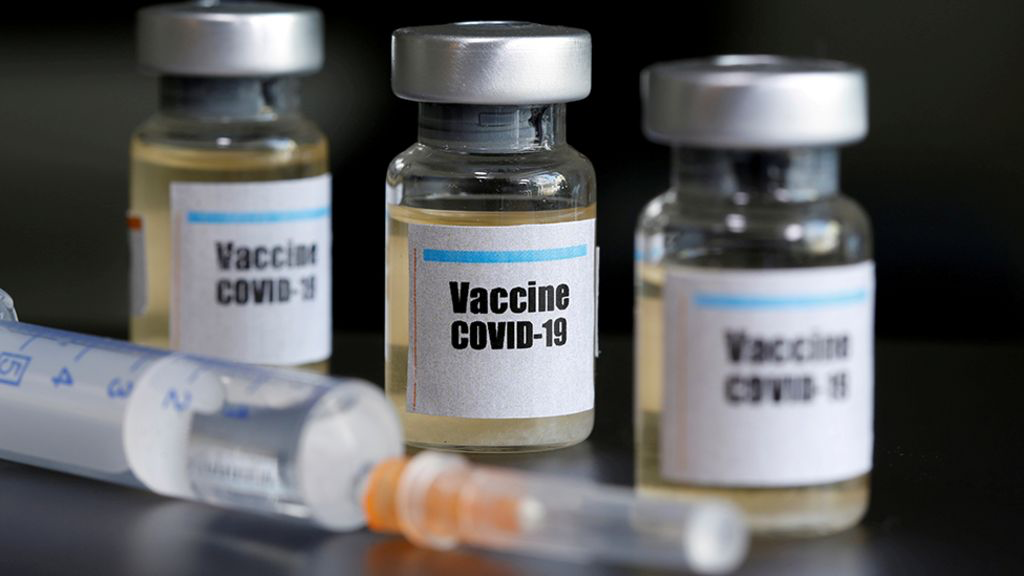
On March 25th, President Biden announced a new goal to administer 200 million coronavirus vaccines within the first 100 days of his presidency. This announcement came after achieving his previous goal of 100 million coronavirus vaccines more than 40 days early. However, vaccine hesitancy among Americans may obstruct this new goal.

The first 100 million coronavirus vaccinations were quite possibly the easiest because millions of Americans were eager to receive them. However, the remaining unvaccinated U.S. citizens may be more hesitant. Hesitant Americans come from every social identity, but recent surveys indicate that Republican men are most likely to refuse vaccination when given the opportunity. Understanding how gender and political party identification interact to create vaccine hesitancy may provide needed clarity on the disparities; we call this intersectionality.

Intersectionality is how two or more social identities interact to create a unique experience. For example, transgender individuals may have a shared experience while Christians have a separate shared experience, but a Christian transgender individual will likely have a vastly different and unique experience than simply combining the two shared experiences. For more information on intersectionality, see Wade and Ferree’s Gender, Chapter 5. Understanding how social identities interact with each other provides a unique view into how party identification and gender interact in the realm of coronavirus vaccine hesitancy.

According to a poll conducted earlier this month, 30 percent of U.S. adults indicated they would not receive the coronavirus vaccine when made available to them. NPR/PBS NewsHour/Marist Poll conducted their poll from March 3rd to March 8th using a probability sample design with 1,227 respondents and a 3.6 percent margin of error. The poll indicated a large discrepancy between political parties and vaccine hesitancy. 41 percent of Republicans and 11 percent of Democrats reported they would refuse the vaccine if it was available to them. The gender gap in this study, though meaningful, wasn’t quite as drastic with 47 percent of men and 26 percent of women saying they would not receive the vaccine. However, these numbers themselves do not tell the full story.

If you combine poll results and then divide these results by political party and gender individually, one would expect 18.5 percent of Democratic women and 33.5 percent of Republican women to indicate hesitancy. These predictions are not far off from the rates the poll reported of 14 percent and 34 percent respectively. However, the numbers look entirely different when you look at men.

Following the same procedures above, you would expect 22.5 percent of Democratic men and 37.5 percent of Republican men to indicate hesitancy. However, the actual disparities tell a completely different story. The poll results indicated only 6 percent of Democratic men and 49 percent of Republican men would not receive the coronavirus vaccine if it was available to them.

To better understand coronavirus vaccine hesitancy, we must look at these disparities through the lens of intersectionality. Republican men are much more likely to express vaccine hesitancy than expected due to this intersectional combination of gender and political party demographic data. On the other hand, Democratic men are much less likely to express vaccine hesitancy than expected. The interaction between identifying as a man and your political party identification seems to push men to either end of the spectrum while women are more moderate.

This intersection means that Republican men comprise the largest social group, nearly half, to resist the vaccine. Some studies have looked at the root of vaccine hesitancy, primarily asking Republicans why they are hesitant to get the coronavirus vaccine. One focus group found several primary concerns expressed by Republicans. These concerns include perceived political controversy, unknown side effects, and general distrust of the government.

The intersection between gender and political party identification seems to magnify these concerns as more Republican men carry these concerns compared to Republican women. Something within the male Republican experience is unique and stands apart from simply combining the unique experiences of men and Republicans.

Some social scientists and journalists have speculated the reason for this trend. While there currently isn’t concrete evidence to conclude the clear reasons why Republican men are so hesitant to get vaccinated, some believe it is due to societal masculinity norms. Republican men are more likely to subscribe to the idea that vaccines do not fit inside a common masculine “superhuman” narrative.

Similarly, Republican women tend to serve as the decision-makers on health-related issues in their homes. Experts have consistently concluded that local messaging from community doctors is more effective at combating vaccine hesitancy than national campaigns. Republican women seem more likely to receive this targeted messaging strategy and therefore become more open to receiving the vaccine than their male counterparts.

For these reasons and others, the intersection for Republican men seems to create a unique experience. This experience, possibly rooted in society’s masculinity norms and gender roles, makes a unique demographic that is far less likely to want the coronavirus vaccine than the intersection might expect.

On the other hand, Democratic men are much less likely to indicate hesitancy than expected. As gender and political identification intersect, something makes Republican men much more hesitant to receive the coronavirus vaccine. This same intersection seems to drive Democratic men in the opposite direction of Republican men.

President Biden plans to administer 200 million vaccines within the first 100 days of his presidency, but vaccine hesitancy may prove to obstruct that goal. With more Republican men indicating this hesitancy than other groups, local vaccine awareness campaigns directed at this sub-group are likely to have the biggest impact in reducing coronavirus vaccine hesitancy.


Civil War and Gender: Yemen

Background 

The civil war in Yemen, a country on the Southwestern edge of the Arabian Peninsula, is cited by many as the worst humanitarian crisis in the modern age, and possibly the worst in all of history. While most

Westerners are probably generally aware of a crisis in some Middle Eastern nation, the true extent of the horrors the Yemeni people experience on a regular basis are, broadly speaking, not well understood.

The Yemeni civil war has been ongoing since 2014, when Houthi rebels joined forces with the disgraced president Ali Abdullah Saleh to swiftly capture Sana’a, the capital city, ousting the internationally recognized president Abdrabbah Mansur Hadi. Hadi then appealed to United States ally Saudi Arabia to the north, and over the last 6 years a coalition led by Saudi Arabia using American weapons has been attempting to win back control for Hadi.

Given the support that the United States continues to give to the Saudi coalition, it is important for us to become aware of what our tax money is used for and the consequences of our support. In Yemen, terrorist tactics by the Houthis – including civilian targeted bombing and hostage taking – makes it difficult to effectively fight them without causing immense harm to the people of Yemen, and the most harm is caused to women.

Theory

As such, we should talk about the nature of womanhood in Yemen. The theory of gender socialization suggests that through the structures of a society, the individual growing up in that society learns how to act within expected gender norms and chooses to what degree they wish to conform with those norms. In interactions with other members of the society, that individual makes gendered judgments about others they observe in the same way that gendered judgments are made of them, continuing the process of socialization.

To understand this process, think about the gendered expectations that the society you grew up in placed on you and to what degree you have conformed with those expectations.

In my own experience, as a white boy growing up in a New York Mormon household, I felt an expectation to get a good education for the purposes of a future well-paying job to support my wife and kids, go on a mission to prove my religious devotion, and generally have self-reliant skills like I learned in Boy Scouts. I learned to value those things because I was taught them in church and at home, but I have also failed to accomplish most of those things because of my own personal gender preferences. By living this failed version of the perfect man I grew up picturing, I present to my nieces and nephews, and anybody else who I might influence, a version of the gender roles I learned, filtered by my experiences and preferences. Just as the behavior of the people I saw in childhood and adolescence informed my views of gender, my behavior will inform the gender views of children who see me. Your own experience likely followed this same general path, with whatever nuances that comes from your own individualism.

Conclusions

When we look at the experience of women in Yemen, then, we need to understand how the different aspects of Yemeni society will inform this process of gender socialization, and how that process has been changed by vicious civil war.

First, the process of socialization in Yemen outside of war. As a majority Muslim nation, religion plays a central role, reinforcing a binary where men are the breadwinners and leaders, while women are subservient and take care of the home. This coincides with structures that keep men in power, making it difficult for women to prove themselves as capable of more. In Yemen, these structures can be traced back to the Imamate, a patriarchal lineage of authoritarians of whom the Houthis see themselves as spiritual descendants. So, during times of peace, gender socialization produces a society of women who serve their husbands and avoid formal work.

War proves a complication to this simplistic gender socialization narrative. With higher numbers of men dying and the home coming under direct and constant danger, responsibility falls onto the women of Yemen to maintain a social structure. During war, the home is the only safe place remaining to children, so mothers become the primary agents of socialization. In turn, children learn from their mothers that women protect their family above all else and gain those expectations for their future families.

Men are the predominant casualties of war, and in Yemen, hundreds of thousands of men have died from direct military attacks and indirect starvation and sickness from a lack of safe work. As such, women have had to fill in the societal roles of those men. While this is promising in terms of long term implications about changing gender norms, the addition of expectations without taking away others means the Yemeni single mother has too much demanded of her.

So we see how processes of gender socialization have placed women at the forefront of dealing with the structural problems that face Yemen today. Women typically take the brunt of societal change and turbulence, and the constant war that threatens Yemen today represents the ultimate form of a society in chaos. Only through peace can these impossible demands be lifted from them, so that society can heal and progress, leading towards a brighter future.

Sexual Harassment and Political Figures

By William Laursen

Background

    In December of 2020, a former aid of Governor Andrew Cuomo named Lindsey Boylan accused the governor of sexual assault. On Twitter, she reflected on her experience of harassment at the hands of the governor stating, "Yes, [Governor Cuomo] sexually harassed me for years. Many saw it, and watched."

     Since Boylan has openly shared her experiences, many other women have spoken out against the governor. In all, ten women have openly testified of harassment from Governor Cuomo including one anonymous woman. Despite these allegations, Governor Cuomo has denied any intentions of sexual harassment and apologized if any of his behavior was interpreted inappropriately. Independent investigations are currently underway.

    Governor Cuomo is not the only political figure to be accused of harassment. Both Democrats and Republicans are accused of inappropriate behavior. Additionally, both male and female politicians are accused. Often these accusations make large headlines for news outlets. For instance, recall the accusations against Brett Kavanaugh during his Supreme Court confirmation hearings or accusations against Katie Hill. Both instances were covered extensively in the media. Because of allegations of sexual assault, many individuals have been pushed to resign from political office, regardless of whether the allegations are true or false. This leads then to a very important issue. The problem of sexual harassment, the pain it causes for the victims (especially if the perpetrator is not brought to justice), and trials for those who are wrongly accused.

Sexual Harassment

    Benjamin Ogles, Dean of the College of Family, Home, and Social Sciences at Brigham Young University, discussed sexual assault in a devotional in January of 2018. In this devotional, he defined sexual assault as an action where a perpetrator forces sexual contact towards a victim without their consent. This contact is not limited to intimate relations but expands to unwanted kissing or touching too.

    The majority of sexual assault does not occur between strangers. Often instances of assault occur between individuals with close friendships and relations. In a survey of Brigham Young University students in 2017, instances of sexual assault occurred 57 percent between current or former dating partners or spouses and 25 percent occurred between acquaintances. Further, males are more likely to be perpetrators while females are likely to be victims of sexual harassment. However, there are instances where males are victims while females are perpetrators. Sadly, about 450 students reported over 725 incidents of sexual assault within the past twelve months before the distribution of the survey.

    Additionally, victims were more likely to report instances of harassment to a friend rather than to an authority figure. This means that friends must be ready to help victims understand how to best respond to a dramatizing experience. Namely, friends can help victims realize that they are not at fault and learn how to properly report instances to the title IX office.

    The #MeToo movement is a social movement against sexual abuse and harassment where people publicize allegations of sex crimes. Starting in 2006, this movement helped women to actively voice the experiences they had with sexual abuse. Proponents of the #MeToo movement strive to show empathy to women who have been involved in sexual assault. Critics of the movement cite instances where individuals falsely allege sexual crimes and show examples of political bias.

Combining Content with Context

    In the field of politicians, we see these principles in action. Politicians violate sexual boundaries just as often as the general public. Male politicians are more likely to commit sexual assault. However, some female politicians have also been called out for and resigned because of sexual assault allegations. Further, some of these instances have been investigated and found no evidence of a sexual assault. Other times, the evidence has been overwhelming, resulting in further calls for politicians to step down.

    Violations of sexual boundaries tend to become more public for politicians than for common citizens. Additionally, consequences for these actions tend to be more severe. Elected officials are often called on to resign as they suffer the wrath of the free press. In the instance of Governor Cuomo, many elected officials have called for his resignation. Other times show that many candidates have lost campaigns or chose to resign due to sexual harassment allegations.

Conclusion

    Because of the public nature of politicians, they often attract allegations of sexual harassment. Sometimes these allegations prove to be overwhelmingly true while other allegations may be false with motives of political gain. Because sexual harassment includes all unwanted sexual contact, including kissing and touching, perpetrators may be at fault even when they believe their actions were harmless. Sexual assault is a real danger and politicians are not exempt from sexual allegations. Those who are responsible for causing harm to an individual should be held accountable while victims should receive the best possible help for healing.

Celebrating National Equal Pay Day: Here’s Why the Gender Pay Gap Won’t Just Disappear


                                                                                                                                                                       Fox TV Digital Team

By Emily Wiest

Gender income inequality has been an insidious problem in most modern societies. On average, women make $0.82 for every dollar that a man makes. To recognize this inequality, March 24th was marked National Equal Pay Day. March 24th symbolizes how far into 2021 women need to work in order to earn the same amount that men earned in the previous year. The recognition of this issue has resulted in a call to action from politicians, female athletes, and celebrities alike.

On March 24th President Biden posted several graphics and pictures regarding the discrepancy in pay between men and women. One such Instagram post was followed with the caption, “Equal pay for equal work is common sense – and it’s long overdue. As president, I’m committed to closing the gap once and for all.” These words echo the desires of many American women, but can it be done? With the proper recognition and attention from people such as the President of the United States, can the pay gap finally be resolved? Despite the attention that the issue of inequality has gained in the last several years, there has been little change in the pay gap between men and women. If we are a country that prides itself on equality and justice for all, why can’t we fix this problem? The solution for this issue is far more complicated than giving women a $0.20 raise.


What the data shows

In 2007, Judy Goldberg Day and Catherine Hill published research that illustrates the complexity of the gender pay gap. Among other variables, Day and Hill considered:

1. The weekly earnings of men and women

2. The undergraduate institutions where men and women studied

3. The gender composition of different majors of study, such as psychology or mathematics.

4. The occupational fields women chose to pursue following graduation

From the data, the authors were able to note that women disproportionately participate in majors that lead to lower paying jobs or accept part-time work, despite attending similar universities and outperforming men academically. The graph to the right illustrates the gender segregation that is prevalent in undergraduate major programs. This sort of gender division may have lasting consequences on networking, negotiation skills taught to men versus women, and hard skills taught to the two groups.


Women and men work in very different occupations

The deep divide in fields of study is not isolated to just the university. Women typically choose occupations in fields that are already dominated by women, such as education, social work, or clerical positions. According to the data, by choosing lower paying occupations, the gender pay gap is already established just one year after college graduation. This means it is not simply the result of a sexist boss, but rather the result of different social norms between men and women.

A possible explanation for the differences in career paths between men and women are the gender stereotypes of femininity and masculinity that plague society. Political Scientists Grace Khunou and Roshini Pillay argue that professions seen as “caring professions,” such as nursing, social work, and childcare are seen as feminine, while analytical and powerful careers are reserved for the men. These stereotypes have lasted decades and still influence career decision-making.


How traditional gender roles affects the gender pay gap

Another interesting and important aspect of the gender pay gap are the traditional gender expectations that a woman is to raise the children while the husband provides for the family. Data show that in 2020, 15.51 million women were employed on a part-time basis, compared to 9.1 million men working part-time in the same year. Ultimately, the gender pay gap divide is caused by a dramatic difference in the number of hours worked between men and women.

The most obvious cause for this discrepancy is children. The labor between men and women regarding childcare and home upkeep disproportionately falls on the woman. The unequal disproportion of labor within the home is an issue that likely will not be changed during Biden’s time in office, contrary to the claims his Instagram posts might make.


So, what’s the bottom line?

Simply put, there is no easy solution to the gender pay gap. Political Scientists and politicians both argue a variety of possible solutions, from mandatory wage disclosure laws to more family-friendly parental leave policies. The solution to the wage gap is most likely a systemic change, rather than change made at the individual level. So, while the National Equal Pay Day is a great opportunity to educate ourselves and reflect on the problems in our workplaces, the change we want to see requires a deeper look at the more complex layers of society.