Monday, March 29, 2021

Transgender Athletes and Changing Legislation

 There are 1.4 million people in the United States that identify as transgender. Transgender describes someone whose gender identity, psychological identification, does not match their sex assigned at birth. On March 11th, 2021 Mississippi became the second state to pass a bill limiting or banning transgender women from participating in school sports. The bill that was passed requires that a person join a team based on their sex assigned at birth instead of their gender identity. As of February 2021 there are 24 other states across the country considering similar bills.


The core argument behind this legislation is evident in the Mississippi bill, entitled the Mississippi Fairness Act, that states that “there are inherent differences’ between men and women” and these differences “result in different athletic capabilities”. The title of bill is appropriate as one side claims that the issue is solely on fairness. They do not believe that it is fair to have young cisgender women competing against transgender women because of biological differences. Cisgender describes someone who personally identifies with the sex they were assigned at birth.

This argument focuses on things like the bone density and heart size being different and the testosterone levels. It proposes that people whose sex assigned at birth is male have the physical advantage. For these people, it is fraudulent in theory.

Despite the passing of the bill, there has been a significant outcry against it. Many people have spoken out against the passage of the bill and are protesting other legislation because they view it as discriminatory in nature. The bill specifically applies to those under 18 years of age. Strictly speaking, the bill and similar legislation blocks the transgender community, specifically transgender girls, from participating in sports. The ability to join sports and be part of a team can be monumental in the development of youth. School sports are supposed to be about inclusivity, and they can be an important element in the socialization experience of the youth.


Concepts: Gender and Gender Socialization

Gender is a social construct. The cultural and gender norms constructed and upheld by society teach people that there are substantial differences. These norms are taught and greatly impact and shape the perspective and beliefs of many people. Stereotypes are born of social constructs and people have these stereotypical perspectives on how men and women are supposed to be. The identification of transgender has historically not fallen into an “acceptable” category of identification by the more traditional perspective.

These stereotypes inspire and promote discrimination. Over 75% of transgender youth have reported feeling unsafe at school because of their gender expression. Discrimination and bullying have been a consistent problem for the transgender community and laws and legislation have not often been in their favor.

Gender socialization is another important concept to consider. This is when the relationship between sex and gender and the expectations that come with that relationship are taught, whether explicitly or implicitly. The relationship is taught and defined by different agents like parents, peers, and schools. A lot of socialization occurs at school because a person is exposed to their peers, friends, teachers, and school curriculum. The impact a school can have on the development and socialization of youth is huge.

What are the implications?

The implications of this situation can be scary. Legislation that intentionally isolates and discriminates against a specific population has never proved to be good. The bills being passed banning or limiting the participation of transgender women in sports have the potential to hurt the youth.

The outcry against the bills helps highlight the pain of the community. The transgender kids "just want to run” or just want to play and enjoy the activity. When they are banned from being able to participate in a normal human experience like playing a sport, they are being told by the institutions around them, like their school, that they are less and what they are is wrong. The socialization occurring, the message being sent by such legislation, can be damaging to the mental and emotional state of these youth.

Given the traditional gender norms and stereotypes that exist, the fear of discrimination of transgender people is a rational and warranted fear. The discrimination the transgender community has faced and continues to face is something shamefully common and prevalent in our society. The transgender community, especially the youth, endure many unnecessary hardships like job discrimination and homelessness.

This new push for legislation in different states banning transgender youth from participating in sports has many important implications that need to be considered. 

The American People Elected the First Woman of Color to the Second Highest Office in the Land. What Does Political Science Have to Say About Her Instagram Feed?

Instagram has quickly become one of the most popular social media platforms, surpassing 1 billion users at the end of 2020.  An Insider article posted in 2019 anticipated that Instagram would have a considerable impact on the 2020 election, citing a survey which reported that 65% of Gen-Z respondents say they check the app daily, with many relying on the platform for political news.  Recognizing Instagram’s reach and influence, 86% of Senators chose to utilize the platform in 2020.  Among them was Kamala Harris, the vice-presidential nominee running alongside Joe Biden in November 2020.  Her “We did it, Joe” video, posted to Instagram the morning the election was called, was shared and reposted by celebratory supporters across the nation.


Kamala Harris’s election was historic in many ways.  For one, she is the first woman in U.S. history to hold the office of Vice President.  For another, she is the first woman of color to serve in that office.  More specifically, Kamala Harris is the first Black American woman and the first South Asian American woman to hold the second highest office in the land.  This is exactly the kind of breakthrough that political scientists love to analyze.  So, what does political science have to say about Kamala Harris’s Instagram feed?


One week before inauguration, Harris posted on Instagram saying she would “be sharing the people, places, and moments that have had an influence on [her] life.”  The first of these was a tribute to her mother, who was “one of the few women of color to have a position as a scientist at [UC Berkeley].”


Her mother’s inspiring story and words of wisdom are a recurrent theme throughout her speeches and Instagram feed, most notable in the IGTV titled “Unburdened.”


A separate post pays tribute to other women who “were central to [her] childhood.”  Harris credits her first-grade teacher, Mrs. Wilson, with “[instilling] a sense of hope and courage during the formative years of [her] life.”


Political science frequently draws on theories from sociology.  One of these theories, gender socialization, states that girls and boys learn what is expected (and frowned upon) for someone of their gender from a very young age.  Kamala Harris’s heart-felt tributes show this type of socialization in action: Harris’s mother led by example as one of the only women of color in her field, showing her daughter that her gender didn’t have to hold her back, and Mrs. Wilson assured her that she could do anything she set her mind to.  These women played an important role in empowering the young Kamala Harris, who was navigating a world which would likely try to tell her otherwise.  Thus, these posts about her childhood socialization serve to partially explain how Harris was able to break through gender barriers and become the first female Vice President.


Another theory which combines the fields of sociology and political science is what is known as the role model effect.  This theory states that women in government have a positive impact on the political involvement of young girls.  According to political scientists Campbell and Wolbrecht, visibility is key.


On her Instagram, Kamala Harris pays homage to the role model effect embodied in Shirley Chisholm, the first African American woman in Congress, and Michelle Obama, who Harris thanks for “empowering the next generation of leaders.”


Beyond expressing gratitude for the women who have gone before her, Harris expresses the responsibility she feels in becoming a role model herself.  In an IGTV titled “What’s Possible,” Harris says, “There are a lot of people relying on us… I do not want to disappoint anybody… I also am fully aware that people are watching.”  She clearly recognizes that the political aspirations of the younger generation are largely dependent upon her visibility as vice president.


From the perspective of a political scientist, Kamala Harris’s Instagram feed revolves around the importance of descriptive representation.  Champions of descriptive representation, such as Mansbridge, believe that seeing individuals in government whose gender, race, or ethnicity matches your own can be deeply meaningful.


In line with this idea, Harris posted an emotional video on November 15th showing photos of young girls—many of them girls of color—standing in front of the TV as Kamala Harris gave her victory speech.  The slideshow is set to moving music while the words from her speech play in the background, declaring, “Every little girl watching tonight sees that this is a country of possibilities,” encouraging those watching to “see yourselves in a way that others may not, simply because they’ve never seen it before.”  This video communicates the impact of descriptive representation in a powerful way.


In the caption of a video posted on September 28th, Harris writes, “When young children see someone who looks like them running for office, they see themselves and what they can be, unburdened by what has been.”  Again, the merits of descriptive representation are reaffirmed and celebrated for the impact that reflective demographics can have on young children.


Another video, posted as an Instagram Reel, shows a woman standing behind one of the gates separating Harris from a throng of supporters, shaking her fist enthusiastically while telling Harris, “I’m so happy to see an Indian woman out here!”


This interaction visibly touches Harris, who writes in the caption that “One of the best parts of being [out here] is meeting people like me who haven’t seen themselves represented on the national stage before.”  Kamala Harris’s vice-presidential bid and subsequent victory offers more than just descriptive representation based on gender: South Asian American women and Black American women can see their ethnic and racial backgrounds reflected in Harris as well.


In a famous excerpt from her victory speech, posted as both a video and a tweet on her Instagram, Harris confidently declares, “While I may be the first woman in this office, I will not be the last.”


Political scientists and women alike surely hope so.


Why Old Asian Women Are Being Targeted: Three Stereotypes of Submission

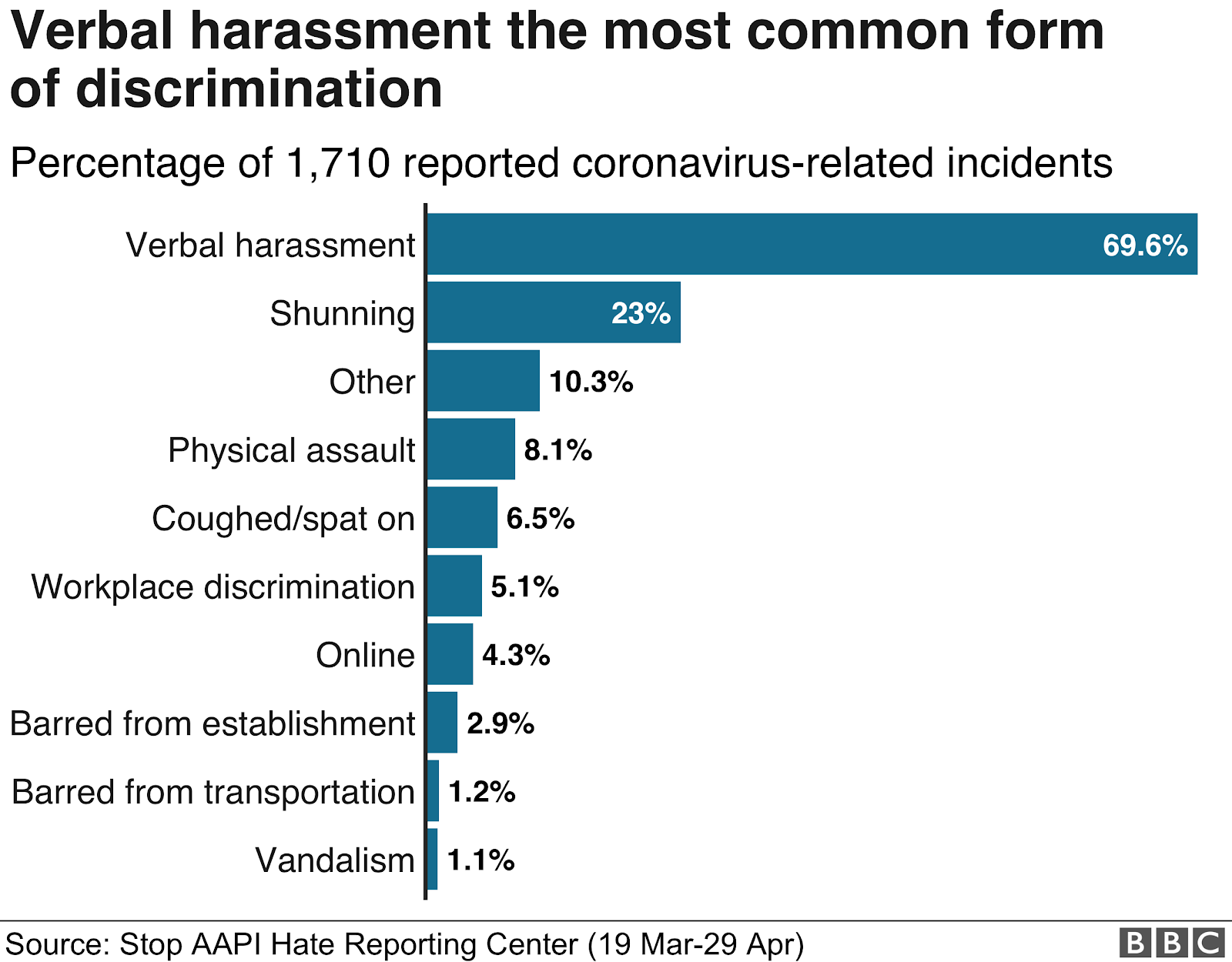
Two weeks ago, six elderly Asian women were killed in a series of shootings in Atlanta that have been associated with a surge in anti-Asian hate crimes. Violence against Asian Americans has increased significantly nationwide, with over 3,800 hate crimes reported in the last year. The bulk of the physical attacks have been against elderly Asians and women, although many Asians reported being verbally harassed. The sudden increase in violence is largely cited as backlash from the Covid-19 virus, which has been inaccurately blamed on Asians by people such as Donald Trump and his use of phrases like the “China virus” and “kungflu” after the virus was discovered in China. However, anti-Asian racism has far deeper roots than Covid-19. Anti-Asian racism stems from the idea that Asians are expected to conform to a mold of submissiveness and silence. Anti-Asian hate crimes have especially targeted Asian women and the elderly who are tied to multiple stereotypes of submission by their unique identities.  

Most common forms of anti-Asian racism as reported by BBC News and Stop AAPI Hate:


Intersectionality

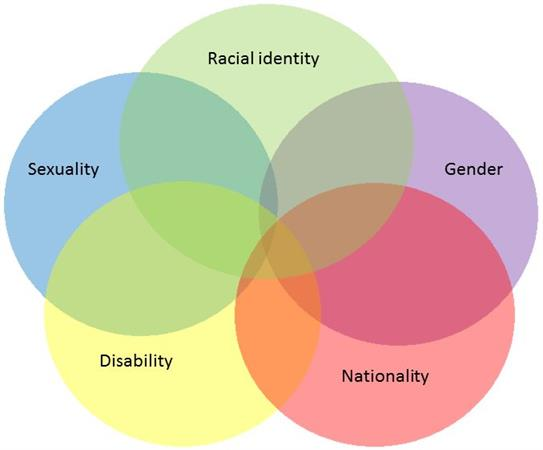
Intersectionality, or intersecting identities, is defined as the differing experiences of discrimination or privilege people have depending on what overlapping groups they identify with. Intersectional identities can be assigned at birth (sex, race, etc) or can be chosen by and for individuals (religion, sexuality, etc). The combination of two or more identities creates a story and experience that differ from what people of just one group may encounter. The intersectionality of Asian American women and elderly Asians combine several stereotypes of submissiveness, which explains why elderly Asian women have become prominent targets of recent hate crimes throughout the nation.


In the diagram below, each overlapping section is an example of an intersecting identity (taken from Womankind Worldwide)


The Model Minority

Asians have long been subjected to stereotypes of submission. The model minority myth is the idea that Asian Americans are hard-working, silent, and obedient. Because many Asian Americans are moderately successful, especially when compared to other racial minorities, anti-Asian racism has largely been dismissed and negated. The model minority myth perpetuates the idea that Asians don’t even face discrimination to begin with because they have typically done well in education, occupation, and income. As a result, Asian Americans are politically and socially uninvolved because they are forced into a mold of complacency and obedience. Asian Americans have essentially been silenced by the model minority stereotype. 


Gender Inequality

The model minority stereotype of submission is especially pervasive for Asian women because of existing sexism and gender inequality. Women, regardless of race or status, are seen as submissive and weak. Women have traditionally been dismissed and degraded through social roles and expectations that upheld notions of female inferiority. Women were often confined to the home because they were seen as too frail and incompetent to work. Although gender equality has expanded significantly, women still face common injustices through sex segregation, the gender pay gap, and sexual harassment. All of these forms of gender inequality stem from the socialized idea that women are inferior to men. 


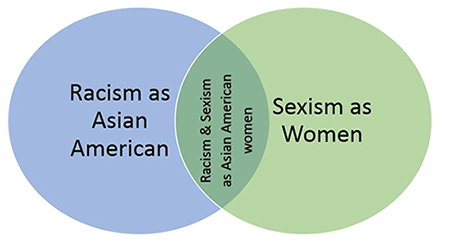
Inequality at the intersection of race and gender increases substantially for Asian women. Whereas Asians are seen as submissive and women are viewed as weak, Asian women are doubly confined to a stereotype of submissiveness and frailty. Asian women are forced into a mold that is both silent and submissive as they experience harsh racism and sexism from their intersecting identities.


Intersectionality of Asian American women (taken from the American Psychological Association):


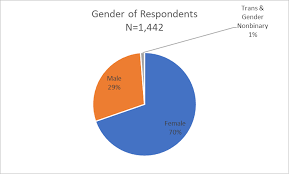
The stereotype that Asian women are extremely docile is driving a significant portion of violence towards Asian American women. The intersectionality of the Asian women killed in Atlanta reflects how Asian women are subjected to multiple stereotypes of submission in ways that differ from those of Asian men or white women. As a result, Asian women have become targets of hate crimes. Stop AAPI Hate recently reported that Asian women are over twice as likely to be attacked as men, suggesting that Asian women are discriminated against by both the model minority myth and gender inequality. 


Asian American attacks by gender as reported by Stop AAPI Hate:


Elder Abuse

Not only are Asian women being disproportionately attacked, elderly Asians are being physically attacked even more than other groups. Elderly people, regardless of race or gender, also carry a stigma of submissiveness and frailty. Elderly people are seen as less likely to complain against or report incidents because they are dismissed as being weak and incompetent. Elder abuse expands from neglect to horrible acts of violence, all of which stem from the perception that elderly people are too weak to defend themselves. 


Elderly people also typically lack resources to report incidents of injustice, which increases for older Asians, many of whom are immigrants who cannot speak fluent English. Reports show that elderly Asians are being attacked at disproportionate rates and are often suffering severe or even fatal consequences. In the last year, an 84-year-old man died after being shoved to the ground, an 89-year old woman was set on fire, and a 60-year-old woman had her face slashed in hate crimes. Elderly Asians are clearly being targeted for being perceived as weak and docile.


When combined with stereotypes of submissive gender and racial identities, elderly Asian women are seen as the most submissive and silent group of people. The Atlanta shootings deeply reflect how elderly Asian women are seen as “easy targets'' of violence because they are bound by three harsh stereotypes of complacency from their intersecting identities. Each of these stereotypes is entrenched in the social structure, limiting any semblance of progress for elderly Asian women. The triple bind of submission for elderly Asian women has become extremely dangerous as anti-Asian hate crimes increase dramatically.

Australia’s Rising Movement Against Toxic Masculinity


Background


A little over a month ago, two rape allegations were filed against two separate members of Australia’s Liberal Party. The first allegation came when 26-year-old Brittany Higgins (see image) broke her silence by claiming that she had been raped while serving as a Liberal staffer in 2019. Higgins explained that following a date with a colleague she was raped in a parliament office in Canberra.  When Higgins first spoke about the rape to her boss (at the time, the defense minister) she was made to talk in the same office where the rape had occurred. The second allegation appeared shortly after in the form of a letter sent to the Australian Federal Police. This letter was written by a 49-year-old woman who claimed that a current cabinet minister (although he remains anonymous due to Australia’s criminal laws) raped her in 1988 when she was just 16. Shortly after she mailed the letter and filed an official complaint with the police, the woman committed suicide. Friends of this woman, as well as legal experts, called upon Prime Minister Scott Morrison to create an independent commission to study the cabinet official involved. Morrison refused this request and said that the situation should be left up to the police. Only a few days later, the police force with jurisdiction over the allegation released a statement saying that they couldn’t reopen the case due to lack of evidence or a proper witness. As if these allegations weren’t vexing enough, yesterday an anonymous whistleblower came forward with access to a Liberal staffer group message showing video evidence of a male staffer masturbating on a female MP’s desk. In response to both allegations and the releasing of the staffer’s video, a group called March4Justice has emerged. This group has held multiple rallies with thousands of people in attendance while pointing out issues within Australian government and culture surrounding toxic masculinity.  One of the head organizers of this group said, “The root of these issues is that there is clearly a problem with toxic masculinity in parliament and Australia.” Another leader stated, “This could well be construed as Australia’s #MeToo movement. I’m convinced it will bring the type of structural changes we saw around the issues of equality and sexual harassment in the UK and US.”


Masculinity and Toxic Masculinity


Masculinity can be quite hard to define. Perhaps it can be more effective to make sense of in terms of societal stereotypes. One organization created a simple graphic showing the most common stereotypes among feminine and masculine characteristics (see chart).  It should be carefully noted here that these stereotypes of masculinity can be shifted or altered with changes in the time or placement of a culture. Meaning, as one author put it, “There’s no one set thing that is manhood. What’s masculine in Teheran is different than what’s masculine in Toronto.” As with most societal changes, tension is created when stereotypes are challenged or replaced. That being said, some academics claim that the masculine stereotype has come under more increased challenges during the 21st century than ever before. This rediscovery or redefining of what it means to be masculine has shaped politics, cultures, and countercultures alike. One writer said that while “...this new masculine ideal is an unalloyed improvement on all the earlier masculine ideals...it has sparked a bad-boy protest movement and counterculture.” This same author is among others who view this counterculture to be increasing based on toxic masculinity, which is a term describing when masculine traits are taken to a dangerous extreme. A National Review article described it this way, “Bro culture at its best is privileged; at its worst, it’s predatory...the answer to feminism is and always has been manhood properly defined. It is not – and never will be – the toxic masculinity of the arrogant.” A study done by a renowned psychologist in 2005 showed evidence that toxic masculinity is predatory and a “socially regressive” quality that instills unhealthy dominance in men. Not only this, but another study found that men who claimed masculine traits on a toxic scale specifically targeted women with significantly higher rates of extreme violence. Simply put, the rising counterculture of toxic masculinity has real, and dangerous, consequences for women. 


Conclusion


Both allegations of rape and the recently released inappropriate video of a male Labor staffer can be explained in terms of toxic masculinity. The allegations show the dangerous and predatory toll that stereotypically masculine traits, such as dominance, can have on women when they are practiced on a toxic level. Additionally, the video shows the privileged attitude and lack-of-sensitivity that toxic masculinity allows a man (or group of men) to feel. One leader with the March4Justice explained the ramifications that toxic masculinity can have, “But the frightening thing is that these are the role models that our children, young men, and women, are being influenced by.” Explained another way, a stereotype is considered a stereotype because of its perceptional power within society. That is why when any stereotype that encourages increased violence exists, such as toxic masculinity, it must be addressed quickly so that it doesn’t perpetuate for coming generations. For this reason, the situation in Australia was compounded with a potentially dangerous consequences: not only were traits of toxic masculinity shown on a national scale, but they were also shown to have existed for decades within the government. This creates risks not only to those immediately involved in the scandals but also to the Australian government and its future reputation. 

Period Products Made Free In Scotland


The Event

    In November of 2020, Scotland made history as the first nation in the world to make period products free for its population. This decision did not come out of nowhere: in 2017, Scotland rolled out a pilot program designed to last for six months which would send sanitary products to schools throughout the country in an effort to combat the phenomenon known as "period poverty." Period poverty is the term that is used when a person with low income is unable to afford the necessary sanitary period products that they need to allow them to healthily manage their period and continue to go about their normal life. 

    While some may not think that period poverty would be a widespread issue in a nation as advances as Scotland, they would be mistaken. In a survey conducted by Children's Charity Plan International in 2017, it was found that 10% of Britain's girls could not afford the necessary sanitary products for their periods. In addition, when Scotland's girls were asked if they had ever been unable to purchase period products or had difficulty in doing so, 58% said they had. This is wildly tragic, as Scotland itself has the economic capacity to alleviate this problem. The creator of the period bill, Monica Lennon, said "In a society as rich as Scotland, no one should have to suffer the indignity of not having the means to their basic needs."

    Lennon has been working on a solution to period poverty since 2016. In 2019, she introduced the Period Product Free Provisions Bill to the Scottish Parliament. After review, revision, and debate, the bill was passed unanimously by the Scottish Parliament in November of 2020. 

The Concepts

    An important concept to grasp in order to understand the full impact of this new law is the third definition of power. This essentially is the idea that society creates an ideology that in itself is a manifestation of power, because this ideology is what we are raised in; the lens through which we see the world. Thus, through socialization, it shapes our interests and what we want. We will return to this. 

    Another important concept one needs to know to understand this bill is intersectionality. Intersectionality is a term that refers to the overlapping of identities, identities such as age, race, class, gender, sexual orientation, or any identity one may have. At times, subsets of these identities are marginalized. When a person possesses more than one identity that is marginalized by society, that person can experience compounded discrimination due to their intersecting identities. Marked and unmarked categories are part of what makes this marginalization so pertinent. Essentially, within categories there is a social default which society and its functions are built around, such as male for gender, white for race, rich for class, etc. This makes it harder for those who do not fit the default to function in a society that does not help them, and those who fall into more than one of these unmarked categories through their identities often experience heightened marginalization and difficulties. 

The Implications

    Backtracking for a moment, due to this third definition of power, women all over the world feel the need to hide or discretely manage their periods. Engrained in those who menstruate is an idea that periods are something to be ashamed of, treated quietly, and are a subject of taboo, because that is what society has taught them. There are specific examples of this from Scotland. It is a point of psychological stress and at times danger to both their future and person. 

    In the best-case scenario, inability to access sanitary products can have an effect on whether or not girls can attend school, how women can perform in their work, and their general ability to go about life normally and effectively. In a worst-case scenario, the inability to manage a period and the taboo that surrounds that subject can be a threat to women and girls' lives. In some societies around the world, periods are viewed as impure, and women and girls are forced into harsh conditions for the duration of their periods. In Nepal, for example, when a person is menstruating, the family and community isolate that person and confine them to a cowshed or some other structure outside the home until the individual has completed their cycle. This exposes women and girls to harsh elements and dangerous wildlife that has often resulted in death. This is just one extreme example, but very relevant.

    Women have grown up in a society under this third idea of power: a society that has shaped their wants to be to quietly manage their periods. This prevents an open opportunity for conversation around menstruation, which is a completely natural, necessary, and important function of the human body and life itself. These attitudes have consequences when periods and their healthy management is not a part of mainstream conversation and thus does not appear on the policy agenda. This has allowed problems such as period poverty to remain an issue thus far and affect the ability of those who menstruate to live their lives to the fullest. That is why this new bill passed in Scotland is so important: it is changing the narrative and defies that power of ideology that menstruating persons have been subject to until now. Hopefully, this bill is the first of many that will begin to alter the narrative surrounding menstruating all over the world. 

    In addition, the bill is covertly addressing intersectional needs, particularly in the areas of age, disability, and gender identity. Because periods are more likely to affect those people of younger age, both because they have not experienced menopause and because they are more likely to not have their own income, the bill providing free period products will help prevent age discrimination. It will also ensure the security of the vital education of these young people, so they will not have to miss out on school. In addition to age, since those with disabilities are more likely to be living in poverty, the period products bill will help reduce inequality with regard to disability and will ensure equal human rights. The bill is also specifically not gendered or gender discriminatory, which means all people who menstruate, regardless of gender identity, will have access to the necessary free period products. Those experiencing an intersection of any or all of these identities will experience increased help from this bill.

    Overall, this bill was a very positive development and will hopefully set a standard for nations everywhere. 

Sexual Harassment, Women Restaurant Workers, and the Subminimum Wage in the COVID Era


Almost all people know that the federal minimum wage is $7.25. Perhaps somewhat less known is that in all but 7 states, a subminimum wage of as low as $2.13 can be paid by the employer to employees. The idea with the subminimum wage is that at least an amount equal to the regular minimum wage comes in the form of tips from costumers. This creates a dynamic that other industries do not really have; that tipped workers are wholly reliant on their customers to make any money. Of course, the restaurant industry is one of these industries that generally uses the subminimum wage and tip system, and as we will see, experiences negative effects from it.

           What does this have to do with sexual harassment?

Well, to put it simply, women in the restaurant industry experience sexual harassment at the highest amounts of any industry in the U.S. This also interplays with the subminimum wage in a big way. It has been found previously that women restaurant workers who receive that subminimum wage ($2.13) plus tip model are almost two times more likely to receive sexual harassment than those same workers who receive the regular minimum wage plus tips in the 7 states that do things that way. Men under the subminimum wage plus tips model also were on the receiving end of sexual harassment more often than men who receive the full minimum wage, though to a lesser extent.

The reasons for this are likely rooted in the economic insecurity that the subminimum wage causes. For workers that make only $2.13 an hour directly from their employer, almost all of that money will be taken by taxes, meaning that the money that these workers actually take home is made all by tips. This makes the workers much more economically insecure than those who receive the full minimum wage.

Due to this economic uncertainty, it incentivizes these tipped workers, especially women restaurant workers to tolerate customer misbehaviors, including sexual harassment as at times it could be financially devastating to call out customers for these behaviors. Management as well is incentivized the same way to not respond to customer sexual harassment due to this greater focus on keeping customers happy. The subminimum wage just puts tipped workers in a weaker position than workers who get the full minimum wage plus tips.

To sum up the previous three paragraphs, the subminimum wage has historically led to greater levels of sexual harassment because it creates a dynamic in which the worker is dependent on the customers for tips, and is thus encouraged to not talk back in situations of sexual harassment.

           What does this have to do with the pandemic? Has the situation changed due to the pandemic?

           In some ways the previously mentioned situation has become exacerbated by somewhat recent events, namely that of the Coronavirus pandemic. This January (January 2021), a survey by One Fair Wage conducted by Social Science Research Solutions found that during the pandemic more than 40% of restaurant workers have seen increased sexual harassment in their workplaces since the Coronavirus pandemic started.

           It is no secret that the pandemic has caused the number of tips to decrease for restaurant workers.  83% of restaurant workers report that they have been receiving less tips during the pandemic. The majority of those workers say that they receive less than half of the money in tips that they used to.

This leads to one reason that sexual harassment for these workers may be increasing. This is that the previously discussed economic insecurity of the subminimum wage is heightened and the already weak position of those under the subminimum wage is further weakened. This causes even more incentive to not say anything when sexual harassment happens.

           Another change in the COVID Era is that of wearing masks. One Fair Wage reported that “hundreds of women shared comments they received from male customers demanding they take off their masks so that they could calibrate their tips to their looks and willingness to expose them on demand.” This demand to lower masks is part of the increased sexual harassment during the pandemic, and is once again, more prevalent among workers who receive the subminimum wage.

           In the end, the changes in the restaurant industry during this pandemic, and especially for women in that industry have further illuminated the relationship between the subminimum wage and sexual harassment; the decrease in tips seen in the pandemic seems to lead to an increase in sexual harassment.