Tuesday, September 23, 2014

Socialization of Gender Norms Through Blogging

The internet has easily been the defining social medium of the 21st century. Bloggers have capitalized on this platform and have turned their interests, hobbies, and thoughts into profit. Although men and women blog roughly the same amount, when it comes to the business side of blogging, women take the lead.

(Figure 1: Gender distribution of bloggers)
According to the Pew Research Center, 18.9 million women blog. Compared to the 16 million men blogging, they have collectively been more aggressive and profitable at “generating financial support from brands” [1]. However, most women bloggers are associated with Lifestyle, or “Mommy Blogging.” Indeed, of the top 10 female bloggers in the U.S (that is, bloggers with the highest readership) all were related to an aspect of motherhood or homemaking [2]. Katherine Stone of PostPartumProgress.com blogs about depression and pregnancy/childbirth. “Design Mom” Gabrielle Blair focuses on style, design, and child-rearing. Ree Drummond of The Pioneer Woman blogs about life on a cattle ranch with her husband and four children, Food Network television show, and two cookbooks. Yet, as successful as these top female bloggers are, Gina Trapani was the sole woman on the list of the 10 top-earning bloggers in 2014 [3]. She founded Lifehacker, a blog with tips and ideas to make everyday life easier. Her blog was one of only 3 others on the top-earning blog list that was not related to technology, finance, or business. As such, lists of “Top Female Bloggers” can be misleading. These women are the top bloggers, but only among other women. If success is measured through a blog’s earnings, men and their generally business and technology related blogs still dominate.

            What do these obvious differences between the sexes in blogging say about gender? While women may not be dominating the highest-paid blogging positions, they have certainly found their success through certain niches on the internet, mainly through lifestyle blogs that cover topics ranging from beauty and fashion to child-rearing and homemaking. Many of these “Mommy Blogs” portray an idea of “new momism,” or “motherhood [as] the most important thing a woman can do,” defined by Susan Douglas and Mereith Michaels in “The Mommy Myth: The Idealization of Motherhood and How it Undermines Women.” These mothers are “always smiling and understanding” exhibiting “boundless, unflagging and total love.” New momism, as defined by Douglas and Michaels, makes a failure of all mothers while placing them in competition against each other [4]. Certainly, these women attract an audience through emphasis on beauty. Their fashionable clothes, trendy children, loving husbands, and stylish homes give readers a picture of perfection.

This socialization through blogging can have diverging outcomes. On one hand, many lifestyle bloggers who understandably portray only the good in their lives socialize other women to believe that they, too, must have it all together. Their clothes must always be of the latest style, their children always happy, their homes always spotless, and their husbands always supportive. Being a woman revolves around being a mother and a wife. Blogging can socialize women to believe that their roles as mothers go far beyond simply caring for the needs of their children. Their lives and families must be stylish and worthy of sharing in the blogosphere as well. Certain ideas of motherhood and gendered expectations get passed on through this as well. Women can be pitted against one another in scenarios of good mom, bad mom. A good mom sacrifices everything for her children. A bad mom does not breastfeed. A good mom sees motherhood as her calling and purpose. The pattern could go on forever (and often does in the comment threads of many popular lifestyle blogs). Lifestyle blogs have glorified motherhood to the point that women without children are not the social norm.
taza.jpg(Figure 2: Popular lifestyle blog Love Taza)
Yet, these gendered ideas of what women are to be as mothers are not completely negative. Indeed, it could be said that lifestyle blogs have elevated the status of women. As Powell points out, “Seldom have mothers negotiated their own constructions in the public eye. Mommy bloggers construct versions of their own motherhood and readers identify, correct, clarify, and reinterpret those constructions” [4]. For much of history, motherhood has been seen as the private sphere occupied by women. The public sphere, occupied by men, consists of careers, business, economics, and politics. Essentially, it is where the action of the world happens, where discourse occurs, and decisions are made. Yet, blogging has given women a tool to take their traditionally private sphere roles and transform them into something viable in the public sphere. No longer are the ideas society has about motherhood shaped solely through the idealistic mother of television (think: Brady Bunch) or magazines. Mommy blogs have made real life, and actual motherhood and mothering responsibilities, a part of everyday, mainstream discourse. Even the most “perfect” mommy bloggers often post about their struggles (sick children, difficult pregnancies, family crises) and find support among other women. Not only have women found solace among other women blogging, but gender norms about parenthood have been changed as well. “Daddy bloggers” are on the rise, challenging gendered stereotypes about unattached fathers. Fathers are helping make the traditionally private sphere of parenthood public, and helping raise the status of parenthood as they do it. The notion of parenting as solely a woman’s responsibility is beginning to disappear, and while there are certainly social norms that exist around motherhood and fatherhood, bloggers are helping bring about new ideas of social norms.

dad blog.jpg
(Figure 3: Popular “daddy blog” “How to be a Dad”)

            In this digital age, blogs, and the discourse that comes about because of them, shape many of our perceptions on gender norms. Inequality and sexism is apparent in the blogosphere. Research found that males are more likely to blog about technology and politics, while women are more likely to focus on journal keeping and the sharing of personal experiences [5]. Men’s “filter blogs” of news and information are more likely to gain followers, but women’s participation in the blogosphere is unprecedented in history. Women are narrating their own stories. Motherhood is no longer a subject discussed behind closed doors, solely a matter of the private sphere. While there are unrealistic expectations placed upon women as a result of blogging, the new ability for women to connect with other women and join the public sphere is an important step towards greater gender equality.


[1] Faw, Larissa. “Is Blogging Really A Way for Women To Earn A Living?” Forbes. 25 April 2014. (http://www.forbes.com/sites/larissafaw/2012/04/25/is-blogging-really-a-way-for-women-to-earn-a-living-2/)
[2] Purdy, Alicia. “10 of the most popular women bloggers in the U.S.” Deseret News. http://www.deseretnews.com/top/701/0/10-of-the-most-popular-women-bloggers-in-the-US-.html
[3] Darling, Annika.”The 10 Top Earning Bloggers In The World.” The Richest. http://www.therichest.com/rich-list/world/worlds-10-top-earning-bloggers/
[4] Powell, Rebecca. “Good Mothers, Bad Mothers and Mommy Bloggers: Rhetorical Resistnce and Fluid Subjectivities.” MP: An Online Feminist Journal. February 2010. http://academinist.org/wp-content/uploads/2010/02/03_Powell_Bloggers.pdf
[5] Lopez, Lori Kido. “The radical act of ‘mommy blogging’: redefining motherhood through the blogosphere.” New Media & Society. July 23, 2009

[Figure 1] Sysomos, http://www.sysomos.com/reports/bloggers/
[Figure 2] lovetaza.com

[Figure 3] howtobeadad.com

Gender in a Marching Band

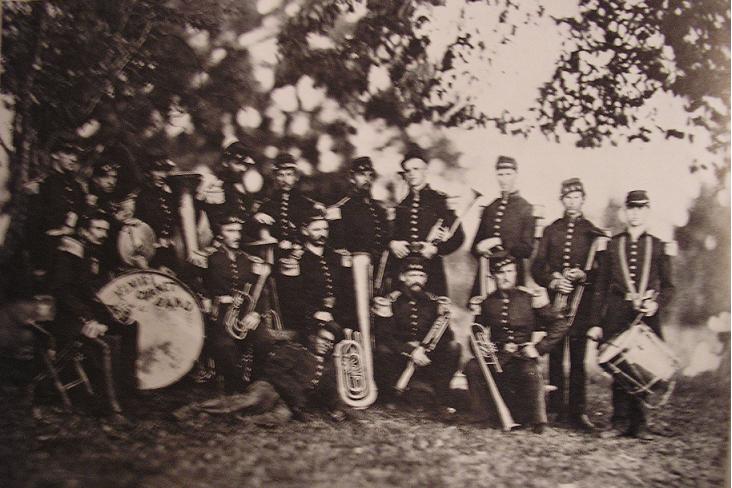
BYU Marching Band
              I decided to focus on the gender equality issues found in the BYU marching band. To start off, I am 5’5” and 110 pounds. This is important because I play the sousaphone in the band. I have had different social experiences in the band because I am a tiny girl playing the tuba than I would have had if Iwas a man or if I played a different instrument.
I’ll start with the easy part, the numbers. There are 145 members of the band (excluding the color guard which I will discuss later), 90 of whom are men or approximately 62%. This is rather significant. Why is it more acceptable for men to be in the band? Do women stay for less time because of gender socialization? There could be a historic military aspect driving some of this inequality which I will consider later.
I expected there to be a larger portion of men in leadership positions than women. Of the 17 leadership positions (which include president, records, logistics, Rocky Mountain committee, uniforms, and drum majors) there are eleven men or 64%. This roughly matches the overall division of men in the band. Six out of the nine section leaders are men or about 66%. Out of 36 squad leaders, 22 are men, about 61%.  Including all leadership, there is about the same proportion of men as the band in general. Looking only at numbers in leadership positions, there is gender equality.
Now I’ll look at the quality of some leadership positions. The most prestigious leadership positions in the band are the band president and the drum majors because they have the most power in the band. This year our band president is a man and we have two female drum majors and one male drum major. So the most esteemed jobs are evenly split. While band members continue to see these positions as vital to the band, the women seem to command less respect. Members of the band often indicate their view that the women are more annoying. The implication is that one of them seems bossy and rude and the other is incompetent. This seems to be a stereotype in many places. [https://www.youtube.com/watch?v=B8gz-jxjCmg] Women in leadership positions are seen as either too masculine and rude or too feminine and incompetent. If these were men I don’t know if the band would view them in the same negative way. Our male drum major is probably about as competent as the “incompetent” girl but he is not viewed as being inept at his job. Gender does seem to play a role in how we view the quality of the drum majors.  
Besides drum majors, the only other committee where women outnumber men is in uniforms. In the uniforms committee there are four women and one man. This reinforces the idea that women should be in charge of uniforms as if all women are automatically more capable of taking caring of clothes than men. I’m on this committee and anyone who knows me can attest that this is not the case. Fewer men asked to be on uniforms committee which implies that the individuals in the band see uniforms as a job for women but the band members seem to listen to our male colleague as much as they listen to the rest of us about uniforms. In general I don’t think women being more qualified to be in charge of clothes is a stereotype supported by the band.
There is an idea in the band that brass is more masculine and woodwinds are more feminine. This is interesting because in the marching band the only sections where women outnumber the men is in the piccolos and the clarinets with an even split in the French horns. The brass and saxophones are predominantly men. This may come from the fact that the band started out in the early 1900s as an ROTC band. [http://bands.byu.edu/bands/marching-band/history] Marching bands today are often descended from historic military bands. [http://46thparegband.50webs.com/regband-hist.html]  I think this plays into the idea that marching bands are a more masculine thing. When women wanted to join it was natural that they were given the lighter instruments because women are generally smaller than men. So this idea that women cannot physically do the same thing as men is brought out in the band.
            Our color guard is made up exclusively of women. The nineteen color guard members are there to dance around the band and to make us look better while waving colorful flags and looking pretty. The fact that there are only women doing this seems to indicate that only women can show off their bodies by dancing around us. It is interesting that we don’t put men in a “look at me, I’m so pretty” position. This would be seen as frivolous and girly, implying that girls are air headed because they think about their bodies too much. The band does support this gendered idea that women are around as eye candy.
            Now for my favorite part, how gender affects how individuals are treated. Recently I heard the terms “piccabros” (referring to men in the piccolo section), “tuba chicks”, and “bone babes” (meaning women in the trombone section). The fact that there are terms for when someone differs from the norm emphasizes that there is a norm to differ from. I’ll use the two extremes, women in the tuba section and men in the piccolo section. While a woman deviating from social norms is seen as cool and encouraged, men are viewed as kind of wimpy. Whenever it comes up that I play the tuba in the BYU marching band, I get positive reactions. I’ve gotten comments from other band members that they are proud of the girls who play tuba. Part of this is a physical achievement; it is usually harder for a girl to carry around a 35 pound instrument. On the other hand, the one guy in the piccolo section is kind of ridiculed. The piccolo section in general is made fun of by the band. This may be because it is seen as a silly girl section. One example is that they put glitter under their eyes for game days. This goes back to the idea that little kids and empty headed women like sparkly things. Even women are criticized for being too dainty and girly, so it is no wonder that men are judged for doing what is seen as exceedingly feminine.
Overall it seems to be socially acceptable in the band for a woman to adopt masculine traits, as long as she isn’t too masculine. On the other hand it is almost impossible for men to act feminine at all without suffering some social consequences. There are not even allowed to try “feminine” things in some cases. All of the gendered issues in band are not institutionalized, except color guard, which means that while implied these are not hard rules. Many of the gendered issues illustrated in the band reflect larger society values and norms. Until society changes, many of the issues found in the band will not change. 

Wednesday, August 6, 2014

Women's representation in Iran

Shah Mohammad Reza Pahlavi granted women enfranchisement in 1963, which women continued to exercise after the Revolution. Still, women's descriptive representation in the unicameral legislature is low, where they hold only 3.1% of seats (Inter-Parliamentary Union, 2014). This is even low for the Middle East region, where the average is 9% female legislators. The Supreme Leader, the top religious figure and member of government who is chosen by a body of clerics, cannot be a woman. (Boroujerdi 2013, 484)

Substantive representation is difficult to measure. Some laws restrict women, specifically from inheritance and ability to testify in court. However, because these laws are based on the Qu'ran and Sharia, they are nearly impossible to change. The issues that are concerns to western women are not the same as Iranian women's concerns. The body of clerics leads to similar results as the highly-whipped votes in the UK parliament- only legislation they approve of has a chance.
The Iranian legislature is also difficult for civilians to access. They cannot simply write to their legislator to voice their concerns. Instead, wasta (interpersonal connects and family standing) is highly important in Middle East politics, and it is generally men who are in positions that allow for this.

Women's symbolic representation may be high in Iran. Ellen Lust writes, "Women remain underrepresented in formal political positions, and they thus turn to civil society activism to make their demands. In so doing, they are also expanding the terrain of democratic civil society." (Lust 2013, 103) Civil society groups are very important in the Middle East, where political parties are weak, tightly controlled, or even prohibited entirely. The Muslim Brotherhood's system of schools, healthcare centers, and other resources sometimes neglected by the Egyptian government is often cited as an important factor in their ability to win the presidency after the Arab Spring. Iranian women have influence in civil society through numerous groups, some focused specifically on women's issues and some more general. Women were also active in the Iran-Iraq war and the Revolution. With time, women's place in society may grow so that they use the skills and connects they have made to obtain more substantive or descriptive representation.

Works Cited:

Boroujerdi, Mehzrad. 2013. "Iran." In The Middle East, edited by Ellen Lust, 478-506.

Lust, Ellen. 2013. The Middle East. New York: Sage Publications.

Inter-Parliamentary Union. "Women in National Parliaments." Last updated June 1, 2014. 
Accessed August 6, 2014. http://www.ipu.org/wmn-e/classif.htm.

The STEM fields: What is keeping women out?


We all know that gender is a major factor in education, and that women are disproportionately disadvantaged within academia.

Actually, only half of that was true. Gender is important in education, but by the numbers females outperform males on nearly every level of academic achievement. For example, the US Department of Education reported that while enrollment rates in primary and secondary schools are nearly evenly split, 57% of all people in postsecondary education are women. While in high school, girls are less likely to be held back, more likely to graduate, and even outnumber boys in AP science and language classes (USDoE 2012). In the post-baccalaureate scene, more degrees have been awarded to women since 1988 (Snyder and Dillow 2013).

However, we still find a large gender gap at college in many of the STEM fields. A 2010 report from the American Association of University Women (Hill et al 2010) found that in 2006, 29.3% of freshmen males intended on majoring in a STEM field while only 15.1% of freshmen females did. At graduation, women received more diplomas in biological, agricultural, and chemistry majors than men, but were outnumbered in all other STEM categories, and at the doctorate level male PhD’s outnumbered female ones in every STEM field, though not always by very much. In the workforce at large, women hold less than a fourth of all STEM jobs (Beede et al 2011)

As such, there has been a significant push to get more girls into STEM majors, but when it comes down to it we’re not entirely certain why girls enroll less in those majors in the first place. There are several different theories: Riegle-Crum et al (2006) found that the academic choices of same-sex friends had a significant effect on what courses a girl would take; others such as Bix (2004) argue that it is primarily a matter of gender norms within the fields themselves; Sax (2001) affirms that there are structural barriers to women in the STEM fields, but suggests that inherent differences between the sexes might drive part of the gap; while Feldman (1999) found that personality type and academic environment were the best predictors for major choice. Conventional wisdom supplies the idea of gendered careers—hard sciences and business for the boys, education and social sciences for the girls—and many in the literature have suggested that this kind of socialization early on in life could be driving the difference.

I would like to add a few words onto the idea of gender expectations and career choice. As I mentioned above, conventional wisdom has an idea of masculine and feminine career paths. In addition, our society has preconceived notions of the traditional role of men and women in life and the family—stereotypically with the man as husband, professional, and breadwinner and the woman as wife, homemaker, and mother. I wanted to see what affect these traditional notions had on my own peers and their career choices interviewed a few dozen, both men and women. There interviews were loosely structured but always included the following questions:

What is your major and why did you choose it?
Did your gender, in any way, affect your choice of major?
Does your major and future career fit into what society expects of you as a man/woman?
Do you anticipate any conflict with your chosen career and your personal life? How do you plan on balancing the two?
Do you think your family life or society affected your personal aspirations?
Why is it important for a man/woman to get higher education?

While my small sample size and non-random selection don’t allow for any external validity, the results are still interesting.

The respondents ran a wide range of careers for both genders, from the arts to the sciences. Half of the men did not feel that gender in any way affected their choice of major, and just as many of the women said gender only had a tangential affect and other factors, usually family, were more important. Only one male and one female felt that their chosen career fit into what society expected of them—an aspiring medical student and medical scientist, respectively. Surprisingly, some of the men in0 stereotypically “masculine” fields felt that their chosen vocation did not fit with society’s expectations, including a mathematician. The women who did not feel like their career fit with societal expectations were usually aspiring for leadership roles.

 A fourth of the women said that they had been encouraged or inspired by family members to go for their chosen career, something which only one man reported. Every person anticipated a conflict between professional and personal life, though slightly more women than men had put much thought into balancing the two. Two-thirds of both genders said that education was important for both men and women.

Perhaps most interestingly, personal interest was overwhelmingly given as the reason for career choice. While gender was a consideration for several of the women, none of the respondents reported choosing a career because it was appropriate or proper for their gender—to the contrary, three of the women said that they wanted to prove that they could be successful in their chosen field as women. Furthermore, the only person who said that they would sacrifice their career for family was a man, and the only person who said that the career came before family was a woman.

What are we to take from this? While this says nothing about the US population, at least among my peer group personal interest was the primary motivator of career choice, above all other considerations. Gender and upbringing may have very well shaped those interests—and several of the respondents suspect that they did—but none of those I interviewed mentioned societal expectations, family pressure, peer groups, or the gender stereotypes about their fields as a deciding factor in their choice of major. As such, among people like those I interviewed, the presence of the gap in STEM fields is primarily a lack of interest.

And perhaps we should not find that so surprising. There are many fields where women outnumber men, both at the collegiate and professional level, but we are quick to attribute those gaps to a lack of interest on part of the men. Might at least part of the STEM gap be explained the same way? Whether or not the genders should have an equal interest is another conversation entirely, but I for one find it comforting that both men and women feel that they can pursue careers which they enjoy, whether or not those careers fit into gender stereotypes.


 SOURCES

Beede, David, Tiffany Julian, David Jangdon, George McKittrick, Beethika Khan, and Mark Doms. 2011. “Women in STEM: A gender gap to innovation.” US Department of Commerce: Economics and Statistics Administration. http://www.esa.doc.gov/sites/default/files/reports/documents/womeninstemagaptoinnovation8311.pdf

Bix, Amy Sue. 2004. From “engineeresses” to “girl engineers” to “good engineers”: A history of women’s U.S. engineering education.

Feldman, Kenneth A. 1999. Major field selection and person-environment fit: Using Holland’s theory to study change and stability of college students. Journal of Higher Education 70, no. 6 (November/December): 642-669.

Hill, Catherine, Christianne Corbett, and Andresse St Rose. “Why so few? Women in science, technology, engineering, and mathematics.” American Association of University Women. Washington DC.

Riegel-Crumb, Catherine, George Farkas, and Chandra Muller. 2006. The role of gender and friendship in advanced course taking. Sociology of Education 79, no. 3 (July).

Sax, Linda J. 2001. Undergraduate sciences majors: Gender differences in who goes to graduate school. The Review of Higher Education 24, no. 2 (Winter): 153-172.

Snyder, Thomas D., and Sally A Dillow. 2013. Digest of education statistics: 2012. National Center for Education Statistics.  


US Department of Education. 2012. “Gender equity in  education: A data snapshot.” Office for Civil Rights. http://www2.ed.gov/about/offices/list/ocr/docs/gender-equity-in-education.pdf 


Photograph from UMass Ahearst website: http://www.umass.edu/researchnext/selling-stem

Thursday, July 31, 2014


The concept of varying leadership styles caused solely by gender identification is a highly contested theory within political science. This is because if this theory held true, it would be expected that women leaders would only act on their group’s supposed inherent characteristics. Additionally, society furthers stereotypical expectations of women’s leadership through perceived characteristics, the double bind, and polarized media. This is incredibly debilitating to the wealth of diverse abilities and attitudes a woman might bring the political arena. 

A 1970s study done by Sandra Bem noted “adjectives that both men and women thought more desirable in one sex than another”. The adjectives used to describe femininity all fall into a harmful perception of a woman only in a supporting and secondary role who can be easily persuaded. Of course, preferred masculine characteristics all emphasize strong leadership traits and a dominant personality. If any of these thirty distinct characteristics are still valued by common society, it seems natural that women in politics would also be viewed through these lenses. Therefore, for women to garner the necessary votes to win elections, it would follow they would have to cater their campaigns and leadership styles to portray characteristics on this list. 

  • Masculine Characteristics: Acts as a leader, aggressive, ambitious, analytical, assertive, competitive, defends own beliefs, dominant, forceful, independent, self reliant, strong personality, willing to take risks.
  • Feminine Characteristics: Affectionate, cheerful, childlike, compassionate, does not use harsh language, eager to soothe hurt feelings, feminine, flatterable, gentle, gullible, shy, tender, warm.


In addition to prescribed and preferred gender qualities, women in leadership positions are typically also affected by the societal standard of treating men as normal and women as deviant. Within the realm of politics, this could come from a historical understanding of politics as a man’s world, one that women have only begun to breach. The above detailed masculine characteristics are preferred by the mass public for those in leadership positions, leaving women in a “double bind” situation, in which they must either act as ladies to be viewed as genuine, or act as men to be seen as leaders. Problems and inequality arise as women politicians who act tough are criticized for taking on masculine characteristics, while women who are emotional are harpooned for being incapable of leading assertively due to uncontrollable hormones. 

Media has more harmful consequences on woman leaders. This is because media constantly criticizes women for either acting too cold, distant, and witchy, or, on the other end of the spectrum, too diminutive and sensitive. Media also regularly falls into the trap of focusing on women’s physical appearances, instead of their lauded leadership capabilities. 

Angela Merkel is the successful current Chancellor of Germany. She has been elected twice in a row, and is currently ranked the fifth most powerful person in the world by Forbes; this is the highest ranking achieved by a woman. I believe that Merkel’s success is primarily due to a defiance of stereotypical gender roles in an unusual way; she does not embody solely male characteristics, but walks a fine line of traits that are gender unspecific. Nor does she allow the media much insider information or even fodder for stereotypical analyzing, which enables her to lead a very unglamorous and pragmatic regime.

After gathering data from several news databases and political journals I consolidated phrases and words that analysts and journalists used to describe Chancellor Merkel. The majority of these words focused on non gendered traits, while only a few noted feminine or masculine characteristics. In the beginning of her political career she was branded as “boring, provincial and rather dowdy”, and when she was running for office she was thought of by some as a “lightweight”. Out of these three negative terms, only “dowdy” is used more in reference to women. Not only are these criticism rather gender neutral, but Merkel was also careful to heed the critiques of the media and adjust; she started wearing “bright, colorful outfits and a new hairstyle to enliven her image. Because Merkel has historically avoided leading either as completely cold and calculating or soft and emotional has made it harder to classify her according to stereotypically preferred gender characteristics.

Furthermore, the words used to praise her leadership style do not focus on either feminine or masculine characteristics. She is considered a “prudent, pragmatic and down-to-earth leader”. This has helped her steer clear of the double bind. 

“Rumpled, awkward, with her de rigueur blazer and slacks (the former often just a touch too tight), Merkel can seem a study in orchestrated ordinariness, a brilliant creation of election strategists attuned to the post-traumatic German psyche. Perhaps it costs a lot of money to look this plain. But over time it becomes clear that she just is who she is, unchanged by power; a woman, like Margaret Thatcher, who is “not for turning.

This description of Angela Merkel notes carefully that for a powerful leader, she dresses and acts very ordinary. However, it does not seem as if the journalist is critical of her choice, but actually admiring of her ability to be unaffected by the public life she must lead. Along the same lines, Andrew Marr of the BBC commented that with Merkel, “there is no exhibitionism and grandstanding”. This comment further points to heightened respect because of her confidence in leading assertively while also showing a lack of grandiose. It is interesting to note that Merkel does not shy away from making tough policy decisions; early in her political career she decisively pushed to make abortion illegal in East Germany, and more recently she has “steer[ed] the EU through its most existential crisis ever. She resisted all pressures to flood the markets with ever more money, but insisted on her bitter prescription: assistance, in return for reforms”. It is crucial to note that neither the assessment of her actions, nor the praise and criticism focus on feminine or masculine characteristics, but rather objectively discuss her ability to lead pragmatically. Merkel’s ability to avoid the double bind has helped her lead without disparaging or harmful factions debating her leadership skills.

Angela Merkel has also garnered success through mastering the media and using news outlets to her advantage. Early in her political career, she turned against her mentor, Chancellor Helmut Khohl, publishing a piece about his private scandal. This led to his dismissal and allowed her to take his place as the front runner in the upcoming elections. Her ruthless use of the media to begin the downfall of a friend was described as “Machiavellian”, but this did not prevent her from continuing the tradition of eliminating her opponents. Remarkably, German citizens do not seem alarmed by this aspect of her leadership. 

Merkel has not limited her media involvement to publishing editorials. As Chancellor she has broadcast podcasts on policy issues since 2006; when a journal author remarked that “a clearly uncomfortable Merkel holds forth each week on such topics as federal reform, key points of health policy reform, and retirement funding." This effort has allowed her presence to be felt in the common household, and prevents a highly polarized media from criticizing superficial aspects of her rule. This type of outreach makes her leadership style even more successful because she is seen as wanting to inform the German populace about policy decisions.

Angela Merkel has been able to avoid stereotypical gender roles, the trap of the double bind, and harsh media criticism by maintaing a very unusual leadership style. This has made her very successful as German chancellor over the course of three elected terms. 


Tuesday, July 22, 2014

The Representation of Women in Rwanda

As of September 2013, “women [hold] an unprecedented 64 percent of seats in Rwanda’s parliament, more than any other country in the world” [1], a status that is still valid to the present day. This figure is shocking when considering that globally, women comprise only 21.9 percent of parliamentary seats [2]. It is even more astounding when taking into account the civil war and genocide that ravaged Rwanda in the early 1990s.

Photo: Parliament of Rwanda

The Rwandan civil war began as the Rwandan Patriotic Front (RPF) attacked the government in 1990, hoping to liberate the country from President Habyarimana. When Habyarimana was killed in 1994, the Hutus and the Tutsis (rival ethnic groups residing in Rwanda) plunged into a genocide, while the RPF simultaneously resumed the civil war with the government army. Eventually the RPF took control of the country and instituted a transitional government, although the terror did not end. By 1998, the RPF began to ‘democratize’ by establishing the Ministry of Gender and Women in Development and grassroots women’s councils, in order to educate women about political participation and promote women’s issues. However, few women understood the purpose of such councils [3]. By 2000, the RPF established quotas that require women to occupy one-third of the seats in decision-making bodies in an effort “to practice positive discrimination” in a new Rwanda [4].

Clearly, at first glance, the quotas have been a success; Rwandan women representatives have exceeded occupying one-third of parliamentary seats. However, scholars seem unsure that the intentions behind the quotas are genuine. Many, such as Jennie E. Burnet, believe that the RPF established the quotas in order to “quell protest from the diplomatic and international aid communities,” and to mask its “increasingly authoritarian governance” [3]. As Elizabeth Powley notes, it is ironic that the only country that has more women than men in its parliament is “less than democratic” and is still operating under a single-party regime [5].

While there has been a significant increase in women’s representation in Rwanda, this has had little effect on policy outcomes [7]. Though there are a significant number of educated, well-off women in parliament, the majority of Rwandan women are poor, uneducated, and experience gender-based violence [6]. So while Rwanda is excelling in representing its women in a descriptive sense, it remains unclear to what degree Rwandan women representatives accurately represent the interests of the female population, since quotas cannot guarantee that this will be the case. This is of significant concern, as Rwanda shifted demographically after the genocide [3]. There are now more women than men in the total population, and many women have had to take on the responsibilities of being the head of the household. These women need to be accurately represented for their circumstances to improve (of course, it is entirely possible for women to be accurately represented by men, but with so many women in parliament, it is hoped that many of the women representatives will be vying for women’s concerns).

While the motivation behind the quotas may not be sincere and how well the female population is actually represented is unclear, Rwandan women’s level of representation can still have a positive impact for shifting gender norms and improving women’s lives as the country continues on the path of healing and progression.


Washington Post/Getty Images


[1] Gogineni, Roopa. 2013. “Rwandan Parliament’s Female Majority Focuses on Equality.” Voice of America, September 26. http://www.voanews.com/content/rwandan-parliament-female-majority-targets-equality/1757899.html.

[2] Inter-Parliamentary Union. 2014. “Women in National Parliaments.” Last modified June 1, 2014. http://www.ipu.org/wmn-e/world.htm.

[3] Burnet, Jennie E. 2008. “Gender Balance and the Meanings of Women in Governance in Post-Genocide Rwanda.” African Affairs 107, no. 428 (July): 361-386. http://afraf.oxfordjournals.org/content/107/428/361.full.

[4] United Nations. 2007. Convention on the Elimination of All Forms of Discrimination against Women: Rwanda. 35-36. http://www.iwraw-ap.org/resources/pdf/43_official_documents/rwandaRWA6.pdf.

[5] Powley, Elizabeth. 2005. “Women in Parliament: Beyond the Numbers.” International Institute for Democracy and Electoral Assistance. 154-163. http://www.idea.int/publications/wip2/.

[6] Wallace, Claire, Christian Haerpfer, and Pamela Abbot. 2008/2009. “Women in Rwandan Politics and Society.” International Journal of Sociology 38, no. 4 (Winter): 111-125. http://www.jstor.org.erl.lib.byu.edu/stable/pdfplus/20628350.pdf?acceptTC=true&jpdConfirm=true.

[7] Devlin, Claire, and Robert Elgie. 2008. “The Effect of Increased Women’s Representation in Parliament: The Case of Rwanda.” Parliamentary Affairs 61, no. 21 (April): 237-254. http://search.proquest.com.erl.lib.byu.edu/socialservices/docview/61422603/AAAB52270D904921PQ/1?accountid=4488.

Thursday, July 10, 2014

Ballroom Dancing and Traditional Gender Roles


            When you walk into a ballroom dance studio to take your first dance lesson the first thing that you learn is that the man leads and the lady follows. Ballroom dance is an art form that at its core represents traditional male and female roles. Men and women are placed in heterosexual partnerships and expected to carry out their very different roles on the dance floor. It is the synchronization of these two different parts that is what makes it so enjoyable to watch. When the two parts do not mesh together the performance looks disconnected and holds less entertainment value.
            The great success of reality TV shows “Dancing with the Stars” and “So You Think You Can Dance” has brought ballroom dancing into the public view. The portrayal of ballroom dancing on these shows is often from a much more traditional standpoint. The women are in feminine clothing, and the men are in tuxedos that are supposed to portray power and wealth [1]. This only furthers the view that ballroom dancing encourages traditional gender roles and stereotypes to the public[2].
While teaching in Manhattan I attended a lecture given in Albany, New York in October of 2012 by a woman who owned a dance studio in Montreal. Her lecture was all about the differences between men and women and how to address them when you taught. For example women have more peripheral vision than men which is why their head is turned more to the left in dance position[3]. They are also not in charge of the direction they are moving in general, but have the ability to direct their partner if they are about to run into someone despite having their head extended further to the left. Even within this lecture there were subtle cues as to how to treat women differently while teaching them, they need more corrections because they like to multi-task or that men have the job to lead so they can’t be overwhelmed with technique in the beginning because they have to think about the steps. Although she herself owned a studio and was a working businesswoman and did not necessarily fit into traditional female stereotypes her teaching was full of subtle cues about how to treat male and female students differently.
Female dancers are constantly being told not to “back-lead” or take the leading role away from their partner. The role of “leader” is restricted for men. This serves a practical role as well. It is impossible for both partners to lead while they are dancing. Someone has to take on that role in order to generate synchronized movement together. It is likely that men have received that role because of the societal roles that existed when partner dancing was first invented. The synchronization of two people is what makes the dancing beautiful. However, because men are leaders women are often portrayed in the softer, more submissive role. The technique books for ballroom dancing include information on steps and roles. There are columns for different elements of dancing including direction of movement, footwork, amount of turn, and rise and fall. The steps are labeled with a “man’s part” and “lady’s part”. The men have an extra column entitled “lead”, to tell them how to lead a step correctly. This adds to the responsibility of men while they’re dancing. Indicating that they are capable of more responsibilities while on the floor than women.
Upon delving into the specific techniques of the craft the differences in the technique of ballroom dancing are much smaller than might be portrayed through a performance. The woman is not a passive contributor to the performance. She needs to participate as much as her partner does. When the international community speaks about couples that compete they call them “teams” which places the woman an equally important footing with her partner. In fact if you were to interview the top competitors in the world it is highly unlikely that any of them would ever view their partner as submissive. The greatest difference is in where the responsibilities of each movement lie.
It has been mentioned at countless lectures that I have attended that it only takes three years to make a good female dancer; however, it takes up to five years to make a good male dancer. This is an indication of the level of difficulty involved in being the “leader” while dancing. This could acknowledge one of two things, that women pick up their parts faster, which is an indication that they could take on more, or that their jobs are easier in relation and thus do not take them as long to master. The latter might seem like it would be the more likely of the two, especially if ballroom is coming out of an era where women were not thought of as equal to the task of learning the same amount of information or responsibilities as men. However, if you dig down into the technique behind the steps in the syllabus for ballroom dance that is international recognized by the International Society of Teacher’s of Dance (ISTD) you would notice a significant difference in the level of difficulty between the man the lady’s parts, especially in Latin American Dancing. Women have steps that are significantly more difficult to teach as well as learn. Men might have more responsibilities on the floor, but women spend much more of their time learning technique and dealing with the difficulties of the figures themselves, while often men repeat a basic action over and over only changing the leads for the steps. This is evidence that would indicate that women and men have jobs that are equally as challenging, and so a woman cannot lead the synchronization of the steps as well as have the more challenging actions to dance.
However the roles of men and women play out on the dance floor the culture of ballroom dancers is much more complex. There are many instructors that might be considered more progressive that promote the idea of unity while you are dancing and that men ask for permission to lead and women allow it so they can have freedom of expression within their movements while not worrying about where they are on the floor. Others, are more traditional and explain dancing as putting the man in a more dominant role and women in a much more submissive one. Whichever way you view it likely depends on the story you believe and want to tell within your dancing. The popularity of ballroom dancing today is likely due to the push for men and women and to explore and define their own meanings of gender roles and how they interpret the older values and create their own meanings while they dance [1].

Sources:
[1] Yamanashi, Allison and Robert C. Bulman. 2007. The Choreography of Gender:
Ballroom Dancing and the Complexity of Gender Identity. Submitted to the meetings of the American Sociological Association. Saint Mary’s College of California.
[2] 2011. Strictly Come Dancing 'popular because of old-fashioned gender roles. The Telegraph. UK.
[3]  Contenta, Patty. 2012. “Teaching Men and Women.” Lecture given at Arthur Murray Region I conference.