Wednesday, November 23, 2016

Utah's Leaky Pipeline to Political Office

Photo Credit: Andrew Gillman

In Utah, women’s representation is quite low amongst state and national congressional positions. Both Senate members from Utah are male and out of four Congress members, only one is female. Only 16 women serve in the Utah State Legislature. In other local offices, there are not very many women holding office. In Provo for example, no mayor has ever been a woman and only one woman sits on the Provo City Council.

The lack of female representation in government offices suggests a leak that is disadvantageous towards women exists in what is known as the pipeline to political office. The pipe is a vehicle for members of the general citizenry to achieve political office; however, holes in segments of the pipe prevent all individuals from making it to office. Each segment of the pipe carries less of the general citizenry than the prior segment.

There are a total of seven segments: citizens; eligibles; aspirants; recruits; primary election candidates; general election candidates and office holders. 

Some leaks in the pipes are intentionally institutional, however others can come from socialization or culture and unknowingly cause specific groups to not travel through the pipe to office. Women specifically are often one of the groups in national, state and local political offices.

But where in the leak in Utah's pipeline to political office? 

Citizens and eligibles

Neither men nor women are at a population disadvantage in Utah, meaning there is no “leak” in the political pipeline at the onset. Out of the approximately 2.76 million people who live in Utah, 1.38 million are male and 1.37 million are female. 

However, not all people in Utah are eligible to run for office due to age, residency requirements and cost to file. These institutional measures do not innately cause less women to move down the pipe to eligible, because the measures affect both sexes equally. 

Aspirants

Traveling from eligibles to aspirants is where many people leave the pipeline. Only 2 percent of Americans said they have ever run for federal, local, or state elected office according to Pew Research. Men, white individuals, and post-graduates are disproportionately likely to seek office.


The same Pew Research study cited only 0.5 percent of women claiming they had run for office. A possible reason why women do not run for office as often as men, despite being equally as qualified, is because they do not believe they are qualified enough.

In the book "It Still Takes a Candidate: Why Women Don't Run for Office" by Jennifer L. Lawless and Richard L. Fox the authors describe how women perceive politics as a masculine profession and when consider running compare themselves to the ideal political candidate. Men on the other hand compare themselves to current candidates in office and think, "I could do as well or better than the person in office."

The perception of politics as being masculine may create a larger leak for women in Utah, especially those who are members of The Church of Jesus Christ of Latter-day Saints. The LDS faith prioritizes motherhood and other characteristics that are often perceived as feminine for women. Female members of the LDS faith may shy away from running for office because they perceive politics as being too masculine for them. Additionally, younger potential candidates may shy away from running for office, as they may not have "enough" time because of homemaking responsibilities.

Because LDS church members make up approximately 60 percent of the Utah population, this leak is significant in the state of Utah.

Recruitment

While individuals can self-select themselves to run for office, recruitment is very important for individuals who are trying to obtain office because it is a form in which political parties send cues to voters.

In a 2013 study, S. J. Carroll and K. Sanbonmatsu found that more than half of female state legislators had not considered running before a party leader suggested they run. Women also must feel like elite campaign support will be given to them the same way it is given to men in order to feel that the recruitment is legitimate according to a study completed by Daniel M. Butler and Jessica R. Preece.

While there has been no published sources on recruitment tactics specific to Utah, responses to recruitment was studied by Preece, Olga Bogach Stoddard and Rachel Fisher. The group found that when they recruited highly active Republican party members in Utah county to attend a free candidate training seminar, women were half as likely to respond to the invite as men.

The group of researchers also looked at data from the Utah Colleges Exit Poll, which indicated that self-reported political ambition increased for Republican men with the opportunity of elite recruitment at a rate significantly more that Republican women.

While this study only focuses on Utah Republicans, Republicans often win the majority with in the Utah State Legislature.

Primary and general candidates

Generally, women are just as likely as men to be elected. A major reason why they aren't more women in political positions is because they don't run. There isn't any evidence that points otherwise in Utah. 


Conclusion


The major leaks in Utah's pipeline to political office exist in the segments of aspirants and recruitment. This is possibly due to certain roadblocks that women perceive. These perceptions held in Utah may be somewhat unique due to the "Mormon" culture in Utah; however, the general female trend of seeing politics as generally masculine matches attitudes of women across the United States.

To "plug" the pipeline, Utahns will need to encourage and recruit more women to run for office.

What Movies Teach about Gender

Our society shapes us into the people we are today. Parents, teacher, friends, and work places are just some examples of agents that tell us how we should act. One area where socialization is especially fierce is gender norms. For millenniums boys have been socialized to be masculine and girls to be feminine. One of the big gender socializers that influences thousands of people across social classes, age groups, and even countries is the entertainment industry. I specifically refer to movies. Children start viewing this kind of entertainment when they are young and continue consuming it throughout their lives. A lot of us take this for granted, but it is important to realize the hidden gender messages that might be becoming a part of us and our children. Look at the following list and see if any of these messages have stuck with you or your family.

1. Men get their hands dirty and women need to be sheltered.

These are probably some of the oldest gender stereotypes that have been portrayed in movies. One of the classic story models is that there is a girl locked in a tower or otherwise in trouble and the man goes through all sorts of dangerous tasks to save her. A lot of these movies show a type of obliviousness from the girl from things that only the man can understand. Women are best in a safe place away from conflict. Men are the ones that should get their hands dirty. In real life that means men get dirty working on the car, dealing with politics, knowing the news, fighting crime, etc. Women avoid this.

This leads to men and women consistently falling into the same gendered jobs. There are jobs that are male dominated and others that are female dominated. Male jobs are often powerful, dirty, educated, wealthy, and/or less socially taxing. Female jobs focus a lot on social labor. Politics is one example of a male dominated job that is powerful and needs leadership skills. Women are more than capable to fill these jobs but perhaps the gender socialization that they see in movies and other places makes them believe that it isn’t the place of a women to pursue these jobs.

2.     Looks are everything

Image result for katniss sweatyThis is a common critic of the media. The main characters of most movies are meant to look good. This is done on purpose so it attracts the most people to watch the movie and increase sales. This may seem like harmless business but it has proven to have great impacts especially on adolescents. Girls think that being skinny is the only way they can be attractive. In movies it is hard to find a lead girl that is even remotely chubby. The chubby girls are the friends of main characters or the ones that are picked on. Maybe this encourages some girls to live healthier, but most lose too much weight or they find unhealthy ways to stay skinny. Main female leads are also expected to look impeccable always. This is even true for strong lead characters like Katniss in Hunger Games. Even when they get dirty or messy, they do so in a terrifically fashionable way. All of this is often harms girls’ self-esteem.


Men are portrayed as attractive and strong. The muscles on male leads are almost a given in popular movies. When they do not have muscles they must be smart, but a lot of them are both.

3.     Men hold in emotions and Women let it out

Image result for captain america angry
In American movies in general, individualism and independence are often emphasized but it is especially true for male characters. As part of this they rarely express themselves and they keep their problems to themselves. Ironically the main emotion they end up showing is anger. This is a challenge for boys and men who funnel many of their other emotions through expressions of anger. If they are sad, they show anger. If they are confused, they show anger. If they are scared, they show anger.

Women leads are also independent and strong minded, but there are a lot more movies that show them talking to parents or friends when they are discouraged, crying because they are hurt or scared, and being embarrassed. But there are also movies that show women holding in their emotions like the men.

4.     Modern women are manlike.

In the name of gender equality, production studios are trying to have women characters that do the same things as the men. “Strong” women leads are praised because they break the stereotypical gender norms. Depending on what you like this can be good or bad. It can be good to show our girls that they do not have to rely on men to protect them all the time and that they can do the same things that men can do. This can help them get on top of their careers even above the men. But the bad side is that this masculinity is praised so much that girls may think that the only way they can excel is if they are masculine. This mentality is far from gender equality. It simply reemphasizes man dominance in society. Girls need to feel comfortable doing traditionally masculine things and traditionally feminine things.

5.     DO NOT BE A SISSY!!

While women can be like men, men cannot be like women. Some movies show gay men or transgender men and they try to show that they can act more feminine, but straight men should be masculine. Period. No discussion. There is a name for girls that act like boys: “Tom boy.” While this name is socially acceptable, names for boys that act feminine are negative: “Sissy.” True gender equality needs to allow men to act more feminine just like women are allowed to act more masculine.

6.     Women should appease men’s visional appetite

This can be a hot topic. Some gender equality enthusiasts say that women should be allowed to show off their skin if they want and that it is not fair that society tells them that good girls do not do this. But others argue that it is demeaning for women to be portrayed as objects viewed for entertainment instead of humans that should be taken seriously. Whatever side of the argument you fall on, it is important to realize that movies often teach that beautiful women have lower cut shirts, tight clothing, and other revealing attire. Movies also make it seem that men should expect this especially from their girlfriends or any girl that wants to grab their attention.

Conclusion

These are just a few of the gendered beliefs that can be taught by movies. Next time you watch a movie, try to think about how it portrays men and women and see what other messages are being taught. Just because the film industry is trying to show more gender equality does not mean they are doing it well. 

Super Sexism of Super Bowl Commercials

It’s 2015 just before the Super Bowl. Amidst the excitement for the game, flames of controversy engulf the nation as activists across the country cry foul to an ad scheduled to air during the big game. The accused was GoDaddy.com; an internet domain registrar known for its edgy and racy commercials. Popular GoDaddy ads of the past had featured busty girls falling out of their shirts, barely-there wet white tank tops, strip teases, and a constant promise for even more revealing if not blatantly pornographic content on their website. Despite such explicit content, not a single ad had been pulled from the Super Bowl lineup since it launched its first commercial. 
What, then, could have pushed the American conscience to protest the 2015 GoDaddy commercial? Rather than sexual innuendos, it was a punchline alluding to selling a puppy over the internet by a modest, older farm-lady. In one year, an animal had accomplished a moral outrage that had not been possible for 7 years’ worth of degrading and objectifying commercials against women.
Image result for godaddy.com puppy with farmer 

How can a country be complacent with gratuitous immodesty and sexism for nearly a decade, yet come unravelled at an implication of animal abuse? The answer is that sexism has been normalized in American society via Super Bowl commercials for the better part of 48 years. Although the above example focuses on women, both sexes are affected by what they view on television. In a landmark study from researchers Haejung Paik and George Comstock, viewers of violent or erotic television content were significantly more likely to adopt aggressive behaviour because of television's influence (Paik and Comstock). A 1984 study confirmed this same effect on gender by showing that implicit sex stereotypes significantly inhibit women’s achievement ambition by showing women in less ambitious career positions in Television  while non-traditional portrayals help women achieve more (Geis, et. al). 


This blog will show how super bowl commercials subliminally and directly skew portrayals of gender through their setting, portrayal of gender characteristics, and inter-gender roles.

Setting

The first mechanism for communicating sexism in Super Bowl commercials is through the portrayal of normalcy through common social settings. Although designed to appear normal, these settings are riddled with subliminal stereotypes. For example, in many commercials, women are not even present. Despite women making up half of the world's population, they are drastically underrepresented in Super Bowl ads and this can be dangerous.  In a study performed in 2007, researchers showed how children’s story books rarely featured any female characters, and those that were featured were incapable of action-hero type behavior. Consequently, young girls grow up learning that they cannot take proactive action or do exciting things as the boys can (Clark et. al, 70). Super Bowl advertisements have an identical problem. Of all the commercials screened, it is likely that less than half of them featured no women at all while no screened commercial featured no men. After realizing this, I sought out female-only super bowl commercials and found a few examples, but generally only ever laced with a theme of sexuality. This is dangerous. An absence of women, as shown by the above studies, discourages female ambition and self-worth.

https://youtu.be/gv5_MqctesE (No men present, but overly sexualized)
https://www.youtube.com/watch?v=E1pWWradc3Y (Two women, but overly sexual)

Characteristics 

Gender identities are also reinforced by portrayals of typical and acceptable male and female characteristics that, while not necessarily malicious, are still categorized as benevolent sexism. For example, one of the first super bowl commercials in 1968 showed a woman and two men buying cigarettes. The woman asked for a “cute” cigarette, ignorant to its name and playfully unable to express herself well. Then, a second man ordered the same cigarettes in a similar manner. He was followed by the third man who, in a deep and assertive tone, ordered the no-filter Camel Cigarettes specifically and purposefully. The narrator then told the audience not to order “frilly” or “fancy” cigarettes like the first two. In this commercial, the first man is shown to be on par with the woman in his taste for “feminine” cigarettes and is clearly looked down upon for doing it. Furthermore, women were shown to be indecisive, ignorant, and child-like in their tastes and competency. Men were shown to be strong, assertive, and deep-toned or otherwise feminine and misguided.


https://www.youtube.com/watch?v=E9ii35LqZww&index=6&list=PLueW7T2mmGsJUdGlPCdXSsKT6lQwN8Eo8 (cigarette commercial [starting at 0:37 seconds)

https://www.youtube.com/watch?v=bdzSyBOjlGA (adjustable razor shows that masculinity is in part determined by facial hair and deep voice)

https://www.youtube.com/watch?v=YaywPvKXrSI (shows women as overly emotional, men as careless and irresponsible)

Inter-Gender Roles

The last layer of gender identity enforcement extends beyond the setting and into inter-gender roles. Typically, women are shown to be a prize for conquest, sensual service providers, or a responsible check to a man’s fun. Conversely, men are shown to be protagonists or irresponsible and boyish. For example, a popular cars.com commercial in 2009 featured a character named David Abernathy. David was the most confident and successful person born. To prove his success, the commercial explained how he had dated a much older girl in middle school and, in high school, he dated a desirable prom queen and the prom queen’s mother. These events, combined with the other heroic and daring events from his life, show that men are protagonists and adventurers, while women are items for conquest. Regarding sensual service providers, the most forward example is the famous Farrah Fawcett Noxzema commercial in which she suggestively rubs shaving cream on a man’s face to which he responds even more suggestively, “You’ve got a great pair of hands.” The other examples included below show how women are only seen as desirable for men’s interests and present no intrinsic value alone.
Lastly, women are often shown as responsible figures checking men’s fun. In the 80s there was a stream of commercials featuring Michael J. Fox and an actress posing as his wife for Diet Pepsi. In these commercials, Fox is shown as being daring, adventurous, silly, and irresponsible. Meanwhile, his wife maintains perfect poise and dignity and is sometimes embarrassed by Fox’s boyish adventures. No commercial featured a man being the responsible party while his wife sought adventure or fun. Women are portrayed as motherly responsible figures, yet men never as such. Though these commercials are not graphic or demeaning toward women, they are perfect examples of constraining benevolent sexism where roles are shown and expected of women and women only. 


https://www.youtube.com/watch?v=RHwziqECCdo (David Abernathy)
https://www.youtube.com/watch?v=OM59nSkjEWU (Farrah Fawcett)
https://www.youtube.com/watch?v=SOPIn9l5rQ0 (Michael J Fox commercial)
https://www.youtube.com/watch?v=rGKNy1_Lheg ( Men can take anything - invincibility complex)

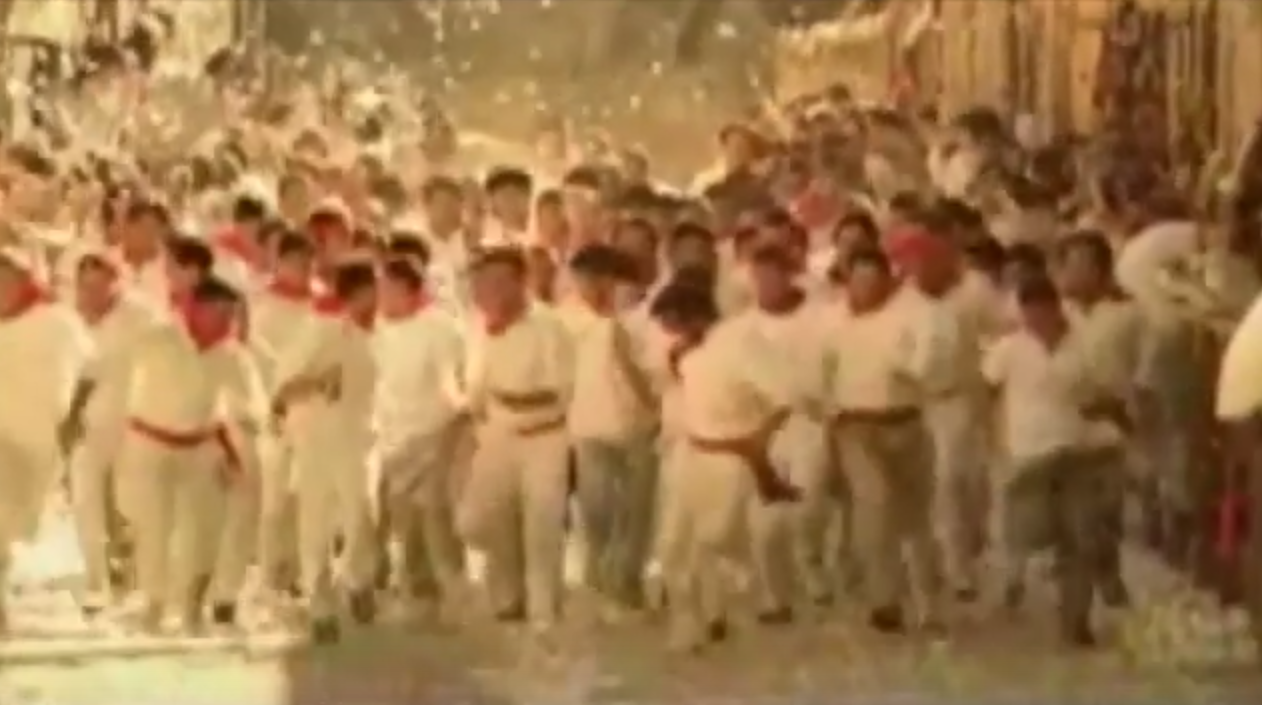
Regarding featured roles for men, consider a funny commercial spoofing the running of the bulls with the “running of the squirrels.” In this commercial, men were shown running, jumping, falling, and suffering all kinds of serious but glorious injuries in the streets. Where were the women? They were exclusively kept on the periphery as bystanders or nurses. Their job was clearly defined as spectators or caretakers. In no way were they to participate in the actual adventure. Together, we can see holistically how women are taught to be passive while men are taught to take the lead without fear of danger or responsibility through benevolent sexist themes.
Women are present, but in what capacity?

All runners are men

Although there were a couple of redeeming commercials (below examples), most super bowl commercials do not take seriously the consequences of the kind of socialisation they broadcast. As we’ve already seen, these images actually do take a toll on men and women’s mental state and can often lead to more tragic consequences. Additionally, some of the racier ads or pornographic content used to appeal to men have been empirically linked to human trafficking, violence against women, and child abuse. The ideas we send out in our commercials need to be tapered by morality and higher judgment. It is not wrong to be creative and funny to sell products, but society must be socially responsible and aware of its sexist tendencies to avoid further harm to its viewers. 

https://www.youtube.com/watch?v=WxlfXeEB6-g (female scientist, protagonist diet-pepsi commercial)

https://www.youtube.com/watch?v=axSnW-ygU5g (1984 Apple female protagonist, hero)

Citations  

Geis, F.l., Virginia Brown, Joyce Jennings (Walstedt), and Natalie Porter. "TV Commercials as Achievement Scripts for Women." Sex Roles 10, no. 7-8 (1984). doi:10.1007/bf00287260.
Clark, Roger, Pamela J. Keller, April Knights, Jennifer Nabar, Theil B. Ramsbey, and Thomas Ramsbey. "LET ME DRAW YOU A PICTURE: ALTERNATE AND CHANGING VIEWS OF GENDER IN AWARD-WINNING PICTURE BOOKS FOR CHILDREN." International Review of Modern Sociology 33, no. 1 (2007): 69-96. http://www.jstor.org/stable/41421255.
@Porn_Harms. "National Center on Sexual Exploitation." National Center on Sexual Exploitation. Accessed November 23, 2016. http://endsexualexploitation.org/.
Paik, H., and G. Comstock. "The Effects of Television Violence on Antisocial Behavior: A Meta-Analysis1." Communication Research 21, no. 4 (1994): 516-46. doi:10.1177/009365094021004004.

Trump vs. Clinton: Media Coverage of the 2016 Presidential Election

         With each passing election cycle, it seems as if there is more and more media coverage of the presidential candidates. And these days, the media is covering far more than just the candidates’ positions on the issues. Both their personal lives and physical appearances have gone under increased scrutiny in recent decades. The 2016 U.S. presidential election presented an entirely new narrative for the media to report on: for the first time, a woman, Hillary Clinton, from a major party was running against a man for the office of president. An election plagued with many controversies on both sides, there was no lack of intense coverage of both major candidates. But did the media treat each candidate, Donald Trump and Hillary Clinton, equally?
            Both 2016 presidential candidates have been prominent figures in the media for several decades. Although not a lifelong politician, Donald Trump is a businessman and entrepreneur and even has his own reality television show. He is no stranger to the public eye. Hillary Clinton has been active in American politics for several decades. Having served as senator of New York and Secretary of State to President Barack Obama, Hillary Clinton too has received her fair share of media attention. In the Democratic primary, Hillary received the majority of the media attention, presumably because of her gender. In the Republican primary, Donald Trump received a vast majority of the media attention most likely due to the passionate, and often offensive, comments he would make. Another reason Trump received so much attention is likely due to the fact that he was surging in the Republican primary polls, despite his extreme lack of political experience.
            It is evident that both candidates received nearly equal coverage in the media during the primaries. This trend continued into the general election, after each candidate became his or her respective party’s official nominee. Once the candidates were nominated, controversy seemed to follow them along the campaign trail. Despite FBI director James Comey clearing Hillary Clinton in the FBI investigation regarding her emails and Benghazi in early July, the media continued to report on the issue up until Election Day. The media, typically more conservative news outlets, continually used this email scandal against Clinton, claiming it made her unqualified and incapable of holding the office of President.
On the Republican side, most media outlets on either side of the political spectrum focused on Trump’s opinions on positions, many outlets commenting on the audacious nature of some of his proposed policy plans. His past business record was a focus of media coverage as well. About a month before the election, a decade-old audio recording revealed Donald Trump having a lewd conversation with Billy Bush. The media was quick to condemn Donald Trump for his words and purported actions. However, some news sources attempted to brush the scandal off as “locker room talk.” After the tape was released, Sean Hannity of Fox News admitted that Trump’s words were wrong but compared it to Bill Clinton, claiming Clinton’s actions were much worse than Trump’s. Hannity claimed that the coverage of the tape scandal was biased in favor of Clinton. Dinesh D’Souza chimed in with, “…never before have I seen the media so aggressively huffing and puffing to drag this crooked hag across the finish line.” D’Souza’s “crooked hag” remark was an obvious reference to Democratic presidential nominee Hillary Clinton.
 D’Souza’s “crooked hag” comment shows an extreme difference in coverage between Hillary Clinton and Donald Trump. Although Trump did receive his fair share of attacks and insults, they were not of the same gendered nature as the insults Clinton received. Vocative conducted a survey of social media to measure the sexual insults directed at the presidential candidate. The survey focused on tweets over just a two-week span. Hillary Clinton was called a “bitch” nearly 2,000 times in this brief time span. Other offensive terms were used against her at high rates as well. This survey also found that the most popular term mentioned in reference to Clinton was “husband.” This survey found many harsh tweets referring to Bill Clinton’s extramarital affairs and blaming Hillary Clinton for said affairs. This rhetoric was also seen in other media coverage. Her opposition, Donald Trump, fueled this type of coverage. He insistently brought up Bill Clinton and his infidelity. Even in the debates, Trump would refer to Bill Clinton and his policies and opinions, not his actual opposing candidate’s, Hillary Clinton’s, views.


Trump’s wife, Melania, was subject to some scrutiny in the media due to her controversial past: both her immigration status and scandalous photo shoots. Despite the reporting on his wife, she did not become the focus of coverage of Donald Trump and his campaign. Donald Trump himself was not innately tied to his wife in his coverage in the media, unlike Hillary Clinton who seemed to be inescapably connected to her husband and his legacy.
Both candidates also received their fair share of media coverage regarding his or her appearance. The media focused on Trump’s hair and skin. Hillary Clinton was accused of not wearing enough makeup, not smiling enough, or even wearing outfits that were considered too expensive. Both candidates were not free from attacks on their appearance but it is evident that Clinton received more of the media’s scrutiny regarding her physical appearance.
            In a study conducted by Danny Hayes and Jennifer Lawless, the researchers set out to determine how a candidate’s appearance affects the outcome of an election and if this influence is dependent on the candidate’s gender. Contrary to what many might believe, Hayes and Lawless’ study ultimately concluded that both men and women received equally negative media coverage regarding their appearance. Subsequently, the researchers found that only negative coverage of a candidate’s appearance would have an effect on the outcome of an election; positive and neutral commentary on a candidate’s appearance had virtually no effect on election outcomes. An interesting conclusion from Hayes and Lawless’ study is that although people can judge a candidate based on pictures they see of him or her, they are most likely to formulate an opinion about the candidate and his or her appearance based on the way the reporter described the candidate. This fact alone shows the tremendous impact that the media has on the views and opinions of the American electorate.  The coverage of Hillary Clinton and Donald Trump during the 2016 presidential election essentially falls in line with the findings of Hayes and Lawless. Both candidates were subject to comments about their appearance, which was mostly negative.
            The 2016 presidential election offered new insights regarding the media coverage of female politicians compared to males. This year’s presidential candidates were both flawed and were not free from controversy. However, the media did not report on these issues the same way. Trump’s scandals were pushed aside and Clinton’s were constantly brought to the forefront of media coverage. One of the most distinct features of media coverage was Clinton in relation to her husband. The media has yet to fully see Clinton as her own person, separate from her husband and his accomplishments and mistakes. This illustrates how gendered the media coverage can be, even in 2016.


Explaining Women's Parliamentary Representation in Iraq

In the last several decades, the issue of women’s descriptive representation in legislative bodies around the world has received increased international attention. Scholars have paid particular attention to how women get into parliament, and what they do once they get there, or in other words, whether women actually represent women. Women’s pathways to political office, including legislative positions, vary greatly by country, and depend on a number of institutional and cultural factors such as regime type, political system, the existence of gender quotas, strength of the women’s movement and civil society in general, and societal norms surrounding women’s political participation, to name a few.

Iraq presents an interesting case study in this regard. Women currently make up roughly 25 percent of legislators in the single house of parliament, the Council of Representatives. However, a historical examination of women’s descriptive representation (or the number or percentage of women in parliament) shows that women have, in the past, made up only a small percentage of legislators (see the below graph).


Source: IPU Parline. Note: In 2003-2004, no parliament existed in Iraq. No data was available in 2005.

A wide variety of factors have influenced and will continue to influence the number of women in Iraq’s parliament. While it is impossible to account for all the variables in this often-complex relationship, I have chosen to focus on the four that, in the case of Iraq, have the largest influence: Iraq’s electoral system, international influence in Iraq, the implementation of a legislative gender quota, and finally, patriarchal norms and norms about women in politics in Iraq.

Iraq’s parliamentary system is a proportional representation system, although the specific type of PR system used by Iraq has changed over the years. For the 2005 elections, Iraq used a closed-list PR system, meaning that each of the 111 approved political parties in the election had a “closed” list of candidates (or in other words, the voters voted for the party, not individual candidates). On the other hand, in its 2010 parliamentary elections, Iraq moved to an open-list PR system, meaning that the candidates on party lists were open to the voters and that voters could select individual candidates on the party list, regardless of order. Additionally, individual candidates could run and be voted for independent of political parties (FairVote.org). Scholars tell us that proportional representation systems (and especially open-list PR systems) are the most conducive to the election of women to legislatures, but caution that this must be coupled with non-discriminatory gender attitudes and accountability mechanisms for gender quotas, if any (International IDEA). While the usage of an open-list PR system within Iraq has had little positive effect (due to other factors discussed later in this article), it certainly has positive implications for the future representation of women in parliament in Iraq.

International influence has had a significant impact on the numbers of women elected to parliament in Iraq. With the 2003 U.S. – led invasion of Iraq, the autocratic regime of Saddam Hussein was overthrown after more than three decades of oppressive rule. The less oppressive political structure that followed opened the way for increased political participation generally, and increased women’s participation in parliament. Women’s representation in parliament in Saddam Hussein’s Iraq was very low, never rising above 8 percent (see above chart). However, the overthrow of Saddam and the restructuring of Iraq’s government by U.S. – led coalition forces led to the introduction of a legislative gender quota in Iraq. In Iraq, as well as neighboring Afghanistan, the international community has used post-conflict intervention as an opportunity to implement quotas as a way of increasing women’s representation in legislature. “In post-conflict societies, the international community today is putting strong pressure on the actors of reconstruction to take effective measures to include women. Thus we see gender quotas of 25–35 percent being introduced in strongly patriarchal cultures where very few women were represented earlier, for example, in the post-conflict societies of Afghanistan and Iraq” (International IDEA).

One could argue that, without the introduction of gender quotas to Iraq’s parliament (as a direct result of international efforts), women would not have the level of representation they currently have. Iraq’s gender quota is a reserved seat quota, meaning that a certain number of seats within the legislature are reserved for women. In Iraq’s case, for every three men elected to parliament, one must be a woman (or in other words, Iraq’s parliament must be comprised of at least 25 percent women). The quota was formally put in place in 2009 (Quota Project). Although not a formal quota (and not legally enforceable), Iraq’s 2005 Election Law states that “At least one woman must be among the first three nominees on the list and at least two women must be among the first six nominees on the list and so on until the end of the list” (Global Justice Project Iraq). The 2009 quota was an amendment of this law. Despite Iraq’s shift to an open-list PR system in 2010, and an additional parliamentary election in 2014, the percentage of women in parliament has remained at approximately 25 percent, the amount mandated by Iraq’s quota. This suggests that, despite having an open-list PR system, a gender quota, and the influence of the international community (which has, in addition to implementing a quota, encouraged democratization and political openness of Iraq), there are other factors limiting increased women’s representation in parliament.

One of the primary factors inhibiting women’s participation in parliament is the existence of strong patriarchal norms and traditionally restrictive norms about women in politics within Iraq. Iraq ranks among the worst in the world in measures of female subordination in marriage and family, discrimination in practice with regards to women’s property rights, and has high degrees of Patrilocailty in marriage (where married women are often removed from their native families and expected to live with their husbands’ families) (WomanStats 2015, 2012, 2016). Furthermore, Iraq ranks 121th out of 188 countries on the UN Gender Inequality Index, with a score of 0.539 (with 1 being total inequality) (United Nations Development Programme 2014). Iraq’s clearly patriarchal culture has prevented women’s significant representation in parliament. In strongly patriarchal cultures, politics is not seen as an appropriate field for women, and women’s engagement in politics can even be seen as threatening to the existing patriarchal social norms. Women are instead encouraged to perform more traditional roles. It is telling that, while women constitute roughly 25 percent of parliament, the only women leading a ministry, as of 2011, is in women’s affairs, a token position. Also revealing is the fact that only 5 of the 86 women in parliament in 2011 got their as a result of actual voter support; the other 81 were given seats through the quota (New York Times 2011). The fact that the percentage of women in parliament has failed to increase, despite the introduction of an open-list PR system for the 2010 and subsequent 2014 elections, and instead has stubbornly remained at the mandated 25 percent dictated by the quota, suggests that patriarchal norms are the most powerful factor in women’s lacking representation in Iraq’s parliament.


With patriarchal norms acting as the most important mechanism of or influence on women’s representation in Iraq’s parliament, despite a favorable electoral system, international influence, and a gender quota, more time is needed in order to determine whether Iraq’s struggle with democracy, coupled with these favorable institutions, will lead to increased women’s parliamentary representation. 

Gender inequality in the workplace, and in the nations.

Gender inequality in the workplace, and in the nations. 

By Graham Miller

  Although the subject of gender equality has been ‘present’ on the stage of contemporary discussion, many argue that little has been done for women’s equality in the workplace. Whether it be salary, recognition, position, etc., when it comes to actual steps forward in creating a more egalitarian workplace, perhaps it is those who still hold the changing power that are having difficulty letting go of their silent power. 


    A 2015 study by LeanIn.org and Mckinsey&Co. show that “for every 100 women promoted to manager, 130 men are promoted”. They further present their results by adding that women have less one on one time with senior executives, and that they’re mistaken for “bossy, too aggressive, or intimidating” when asking for promotion or compensation. Perhaps it could be argued that women are not doing enough themselves to attain this equality, however, if only 17% (Wallstreetjounral, 2015) of women make up the executive group, how could they ever leverage the gender in majority, out? It is clear there are is a silent barrier above these progressive women in the workplace, yet, another barrier which has been more classically mentioned comes directly from culture.

    Born from the notion that culture breeds ones perception of truth. Culturally, each country or nation in the world varies dramatically from one another, and has different gender roles prescribed for women. Historically across nearly all cultures, women have been regarded as the head of the development of their children, and nothing else. The difference comes as culture has deemed it a sacred or a by necessity. Although it has not been the case for women in the past to go and be the executives of the farm, factory, or bank, still today many view their role in the family as what they should aspire to. This cultural placement seems to be the center point around which most arguments facing the debate of the limited amount of women’s rights exists today.
    Having explored the male dominated work place and culturally prescribed gender roles that women are up against in their journey to complete equality, it is not hard to feel like it is an all uphill path. This could lead younger girls to feel like the battle is pointless, to them, it would be appropriate to mention the words of the first female presidential candidate: “Never doubt that you are valuable and powerful and deserving of every change and opportunity in the world to pursue and achieve your own dreams.” or that of Rosa Parks who said “I have learned over the years that when one’s mind is made up, this diminishes fear; knowing what must be done does away with fear.” The influence of powerful individuals regardless of race or gender have begun what would be progressive steps in the right direction. 

    So, although it may seem this gap is yet too large, it can be changed, and gender equality could be closer than it seems. But first, these gender socializing institutional inequalities must be addressed clearly, changed, and reformatted in such a way that all feel comfortable going to work. 

Tuesday, November 22, 2016

Investing in Women: The Story of Women's Representation in Rwanda


November 22, 2016


By Elise Hall

If you were asked “Which country has the best political representation for women?” Your answer might be a progressive Scandinavian nation or perhaps the United States, but the small sub-Saharan nation of Rwanda would likely not cross your mind. 

Not only is Rwanda the nation with the largest proportion of women serving in an elected body in the world; it is also the only nation with more women serving in elected office than men. So why is a nation mostly known for massive genocide also the country that has the best political representation for women? It actually turns out that genocide and women’s representation are highly connected. 


In 1994 ethnic struggles between the Hutu and Tutsi tribes in Rwanda led to the death of over one million people. This left the nation with a skewed proportion of men and women, with women making up nearly seventy percent of the nation’s population. The genocide shifted gender roles and forced women to take on the role of head of household, community leader, and activist, in the absence of men in their communities and homes. 


As the nation was rebuilding, Rwandan women had the unique opportunity to influence the constitution of the healing nation, and insert themselves into political positions. In an effort to stop further ethnic conflict, and unite the country, ethnic divisions were largely ignored in the new constitution which left room for gender, age, and ability to be recognized as important distinctions among the Rwandan population. 


With this historical context in mind, the answer to why Rwanda is so representative can be answered with one word--quota. Quota in this sense refers to the practice of requiring a certain amount of women to be included in government offices, something more than thirty countries worldwide are doing. Rwanda set aside 30% of the seats in the lower elected body of their government to be reserved for women, and this happened largely as a result of the power vacuum created by the genocide. 


The genocide also led to the creation of the Rwandan Ministry of gender, and women’s councils at every level of government. Despite the progress for women in terms of representation, there was no real change in the political power of women. A paradox was apparent in Rwanda--as representation of women increased, women’s policy making influence decreased. The inverse relationship between representation and policy making influence can be attributed to four things. The first is that interests groups after the genocide had the ability to influence policy as the nation was rebuilding, and women took full advantage of that opportunity but other interest groups working against women did the same. Second, there was a focus on elections and government positions rather than other means of political participation which may have led to a decrease in interests groups (such as women ability to shape policy. Interest groups accessed only one mechanism of policy making, the legislature, and in doing so they limited what they were able to accomplish. Third, appointing women to high level positions and reserving legislative seats meant that women were seen as capable candidates for politics. The top-down approach of having women as visible elected officials was effective at the high levels of government, but in lower levels of government women were unclear what their roles and policy objectives were. Lastly, the increase in women’s representation showed that groups that were once subordinate to other groups in society could be benefitted by quotas in countries with democratic governments. However, Rwanda was not entirely democratic. 


As a result of international pressure, RPF, the controlling political party in post-genocide Rwanda, instituted gender quotas to create a guise of democracy due to pressure from the international community. Quotas demonstrated good governance, but were really just masking the fact that Rwanda was still very much an authoritarian government that was slowly working towards democracy, rather than a fully-fledged democratic nation. 


Despite the fact that there have been obstacles to effective policy making and democratic governance in Rwanda, it is also undeniably true that the status of women has improved since the Rwandan Genocide. The crisis of women after the genocide led to an increased role of women at all levels of government, at first simply because of the lack of men, and later because women realized they were capable of holding such roles. 


Grassroots movements among women were effective at getting policies through and getting women elected. Additionally, support from the international community empowered women to be leaders, and encouraged policy makers at the highest levels of Rwandan government to forge a place for women in politics though their constitution. Those Rwandan policies, including gender quotas, have created a nation where 56.3% of elected officials are women, 26.3% more than are required. 

There is a prominent theory about the representation of women in government that says that there is a “pipeline of representation.” At one end of the pipeline is a pool of citizens comprised 50% of men and 50% of women, and at the other end is a pool of representatives that is 20% women and 80% men. These percentages indicate that there must be a leak somewhere in the pipeline where women go missing from the political arena. For many nations that pattern of the pipeline is true, but Rwanda is not one of those nations. Rwanda is an exception to this rule because the underlying assumption that the population is divided equally among men and women was not true in post-genocide Rwanda where the population was 70% women and 30% men. Women are so well represented in Rwanda because as a larger part of the population, they were able to more easily insert themselves into government. As a result, the pipeline is significantly less “leaky” and 56.3% of elected officials in Rwanda are female. 


The positive effects of quotas in Rwanda are evidence that the composition of representation matters. More women participate in government, more resources exist for women, and more family and female centered policies are created in Rwanda, likely as a result of having more women in government. Clearly, nations that invest in women do better, Rwanda’s approach to gender may be one that the world needs to emulate if it wants to see progress in representation.